

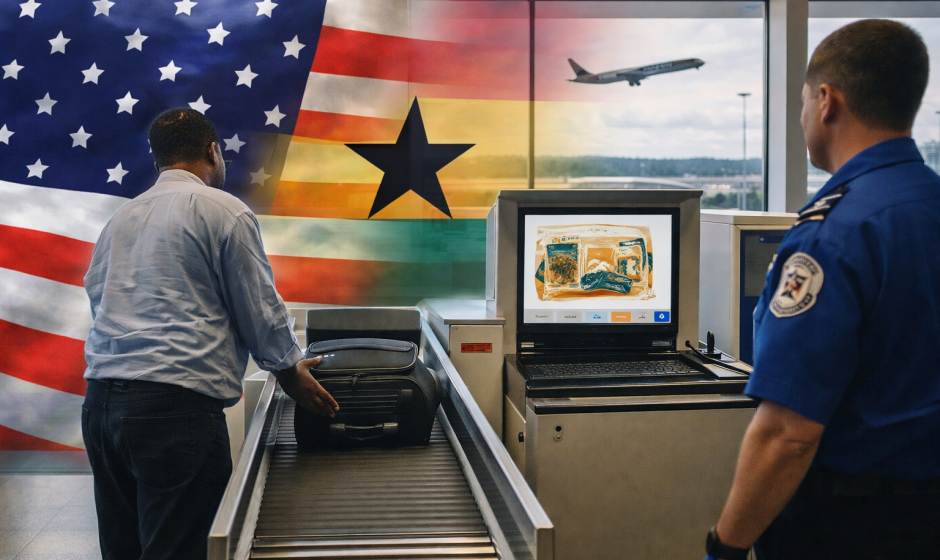

If you are traveling from Ghana to the United States, you may wonder whether you can pack Ghanaian food in your suitcase. The answer is yes, but strict U.S. agricultural rules apply.
Food entry into the United States is regulated by:
• U.S. Customs and Border Protection
• USDA Animal and Plant Health Inspection Service
All food must be declared. Some items are allowed. Many are restricted. Final approval is determined at inspection.
Official U.S. Customs guidance is available here:
CBP Agricultural Items Guidance
You Must Declare All Food
Every traveler entering the United States must declare all food and agricultural items. This applies whether you are using a paper customs form or an electronic kiosk.
You must declare:
• Snacks
• Spices
• Coffee
• Sauces
• Fruits and vegetables
• Meat products
• Dairy
• Honey
• Seeds and plant materials
If you declare an item and it is not admissible, it is typically confiscated. Failure to declare agricultural products can result in civil penalties.
Fresh Fruits and Vegetables
Many fresh fruits and vegetables are restricted due to pest risk.
Admissibility depends on:
• Type of produce
• Country of origin
• Pest status
• Processing method
Travelers should not assume that fresh or frozen produce will be allowed. In most cases, fresh produce is refused.
Official USDA guidance:
USDA Fruits and Vegetables Portal
Meat and Animal Products
Animal products are highly regulated.
Restrictions may apply to:
• Fresh meat
• Dried meat
• Smoked meat
• Sausages
• Animal-based stews
• Bush meat
Admissibility depends on disease status of the country of origin and product type.
Many meat products from foreign countries are restricted unless specifically authorized.
Official USDA guidance:
USDA Meat and Seafood Guidance
Travelers should treat meat products as high risk for refusal.
Seafood
Seafood is regulated differently from red meat.
Commercially processed, shelf-stable seafood may be admissible if properly packaged and declared.
Fresh seafood and dried seafood are subject to inspection and case-by-case review.
Final decisions are made at the port of entry.
Dairy Products
Dairy admissibility depends on:
• Pasteurization
• Processing method
• Packaging
• Country disease classification
Some commercially processed dairy products may be admissible if properly packaged and declared.
Raw or homemade dairy products are generally restricted.
Shelf-Stable Packaged Foods
Commercially packaged, factory-sealed foods are more likely to be admissible.
Examples that may be permitted after inspection:
• Packaged biscuits
• Commercial chocolate
• Roasted coffee
• Dry spice blends
• Shelf-stable sauces without restricted ingredients
Even packaged foods are not automatically guaranteed entry. Inspection determines admissibility.
Seeds, Plants, and Soil
Many seeds and plant materials require USDA permits.
Soil is generally prohibited.
Permit information:
USDA Permit Portal
Ghanaian Food Risk Overview
| Food Item | Risk Level | Inspection Likelihood |
|---|---|---|
| Factory-sealed biscuits | Low | Usually admissible if declared |
| Chocolate | Low | Typically admissible |
| Roasted Ghana coffee | Low | Typically admissible |
| Shito without meat | Moderate | Ingredient review required |
| Dried fish | Moderate | Case-by-case inspection |
| Smoked goat meat | High | Often restricted |
| Bush meat | Very High | Prohibited |
| Fresh mango | High | Commonly refused |
TSA vs Customs
Transportation Security Administration rules govern airport screening. U.S. Customs and USDA rules govern entry into the country.
An item allowed through airport security may still be refused at U.S. entry.
TSA guidance:
TSA Food Guidance
Key Takeaways
• Declare every food item
• Avoid bringing fresh produce
• Avoid bringing meat products
• Bring only personal-use quantities
• Keep food in original packaging
• Expect inspection
If you are also planning your travel to Ghana, you may find our guide helpful:
How to Get a Ghana Tourist Visa
Compliance Notice: All money transfer services must be licensed by the Bank of Ghana.