

Ghana Citizenship by Marriage: Proof, Steps, Timeline
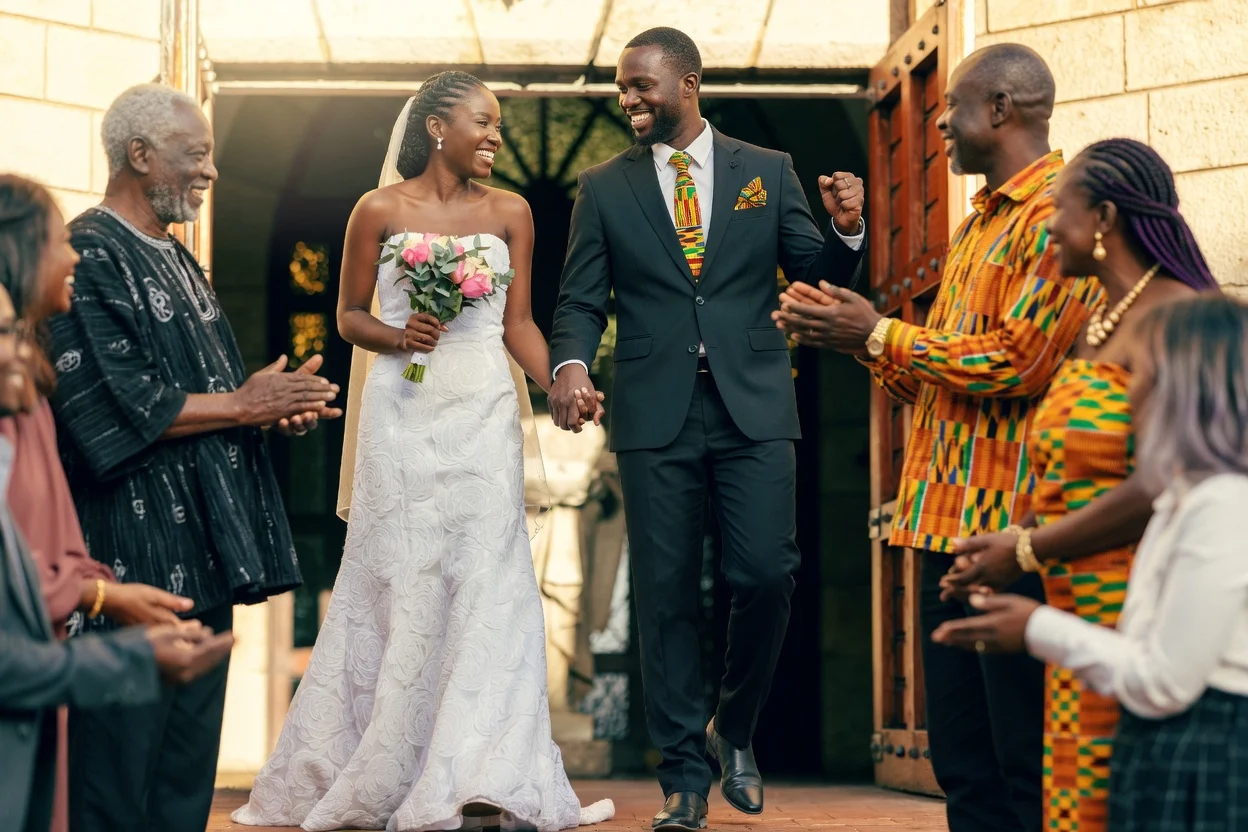

Under the Ghana Citizenship Act, 2000 (Act 591), a person who is or was married to a Ghanaian citizen can apply to be registered as a Ghanaian citizen under Section 10(2).
This is different from ordinary naturalization. Naturalization is governed by Sections 13 and 14 and normally requires 12 months of residence immediately before applying plus at least five years of residence during the preceding seven-year period.
The marriage-registration provision itself does not contain that same naturalization formula. However, applicants should not interpret this as meaning that residence in Ghana is irrelevant.
Ghana’s Constitution also contains a specific rule for male applicants. Article 7 provides that, in the case of a man seeking registration through marriage to a Ghanaian woman, the applicant must permanently reside in Ghana.
Act 591 also protects widowed spouses and contains safeguards against marriages entered into primarily for citizenship. This guide explains the current requirements, application procedure, fees, processing time, residence questions, and documentary issues involved in citizenship by marriage.
Related guides:
What is Ghana Citizenship by Marriage?
Ghana citizenship by marriage is a form of citizenship by registration available to qualifying spouses of Ghanaian citizens.
Article 7 of Ghana’s Constitution provides that a woman married to a Ghanaian man or a man married to a Ghanaian woman may apply to be registered as a citizen. Section 10(2) of the Citizenship Act, 2000 states that a person who is not a Ghanaian citizen and “is or was married to a citizen” may apply for registration in the prescribed manner.
The Citizenship Regulations, 2001 (L.I. 1690) prescribe Form 3 specifically for applications under Sections 10(2) and 10(3).
Marriage does not automatically make a foreign spouse a Ghanaian citizen. The spouse must apply, provide the required evidence, undergo the government’s citizenship investigation process, and take the Oath of Allegiance if approved.
Regulation 8 of the Citizenship Regulations requires applications for the acquisition of citizenship to be referred by the Minister for the Interior to the Ghana Immigration Service for investigation. GIS then submits its report and recommendations to the Minister.
What if the Ghanaian Spouse Dies?
Section 10(3) expressly extends the marriage-registration pathway to a person who was married to someone who was a Ghanaian citizen at the time of that spouse’s death.
A widowed applicant should expect the documentary package to differ from the Ministry’s ordinary active-spouse checklist. For example, a spouse consent letter obviously cannot be obtained from a deceased spouse. Confirm the replacement evidence required by the Ministry before filing.
What if the Marriage Ends After Citizenship is Granted?
Section 10(4) states that where the marriage of a person already registered under the marriage provision is later dissolved, that person remains a Ghanaian citizen unless the citizenship is renounced.
Divorce after citizenship is granted therefore does not automatically cancel the citizenship.
The situation is different if the marriage ends before citizenship registration is completed. Although Section 10(2) uses the phrase “is or was married,” applicants whose marriage has already ended should obtain current Ministry guidance before assuming that the ordinary active-spouse administrative process will apply unchanged.
Marriage Fraud and Good Faith
Section 10(6) specifically addresses marriages entered into primarily to obtain citizenship.
If it appears to the Minister that a marriage was entered into mainly for the purpose of obtaining registration, the Minister must require the applicant to establish that the marriage was entered into in good faith.
A marriage certificate therefore proves the legal existence of a marriage, but it does not prevent the government from investigating whether the marriage is genuine.
Dual Citizenship After Registration
Ghana permits dual citizenship, subject to the law of the applicant’s other country.
However, the previous version of this guide incorrectly stated that a person who retains another nationality must obtain a Dual Citizenship Certificate in order to use both citizenships legally.
That is no longer the correct position.
Who Qualifies?
The core legal requirement is marriage to a Ghanaian citizen, but the current administrative process imposes additional practical requirements.
- Current spouse of a Ghanaian citizen: Section 10(2) permits a non-citizen who is married to a Ghanaian citizen to apply.
- Widow or widower of a Ghanaian citizen: Section 10(3) expressly covers a surviving spouse where the deceased husband or wife was a Ghanaian citizen at death.
- Male or female spouse: Both men and women have a constitutional route to registration through a Ghanaian spouse.
- Male applicant: Article 7(6) of the Constitution specifically states that the marriage-registration provision applies to a man only if he permanently resides in Ghana.
- Spouse who is Ghanaian by naturalization: The Ministry specifically requires a copy of the Ghanaian spouse’s naturalization certificate where the Ghanaian spouse obtained citizenship through naturalization.
- Current Ghana residence status: The Ministry currently requires the applicant to provide a current or indefinite residence permit.
- Five years in Ghana: The Ministry’s current registration page contains an explicit notice stating that the applicant should reside in Ghana for at least five years.
The Constitution and Act also contain different wording concerning male and female spouse applicants. It is therefore safer to describe the pathway as available to both sexes rather than to say that every procedural requirement is necessarily identical.
Key Requirements
The Ministry of the Interior currently lists the following principal documents for registration as a Ghanaian citizen through a spouse:
- Application Form 3. The Ministry currently instructs applicants to purchase Form 3 from the Ministry of the Interior.
- Applicant’s passport. A copy of the passport bio-data page is required.
- Current or indefinite Ghana residence permit.
- Ghanaian spouse’s passport. The Ministry specifically lists a copy of the spouse’s Ghanaian passport bio-data page.
- Spouse consent letter. Required in the Ministry’s ordinary spouse-registration checklist.
- Marriage certificate. Submit documentary proof of the marriage.
- Naturalization certificate of spouse, if applicable. This applies where the Ghanaian spouse became Ghanaian through naturalization.
- Application letter. Address the application to the Minister for the Interior.
- Four passport-sized photographs. The Ministry currently specifies four photographs with a white background.
The previous version of this article listed two referees, police clearances from Ghana and the applicant’s home country, and only two passport photographs as standard mandatory documents for every marriage applicant. Those items are not part of the Ministry’s current published spouse-registration checklist and should not be presented as universal requirements.
That does not prevent GIS from requesting additional information during its statutory investigation. Applicants should provide any additional evidence formally requested for their individual file.
Does the Marriage Have to Be Registered in Ghana?
A valid marriage certificate is required, but do not assume that every foreign marriage must first be re-registered with Ghana’s Registrar-General’s Department before a citizenship application can begin.
If your marriage took place outside Ghana, ask the Ministry or the Ghanaian mission responsible for the document whether the certificate requires authentication, legalization, certification, or another form of verification.
Different marriage systems and countries produce different records, so there is no useful one-size-fits-all authentication instruction.
Oath of Allegiance
Section 10(8) states that a person cannot be registered as a Ghanaian citizen without taking the Oath of Allegiance.
Section 12 then provides that a person registered under Section 10 becomes a citizen from the date stated on the Certificate of Registration, and that date must be the date on which the Oath of Allegiance is taken.
The Citizenship Regulations further state that the oath is endorsed on the citizenship certificate and that no certificate is issued unless the oath has been endorsed.
Application Process
The current process combines Ministry of the Interior administration with Ghana Immigration Service investigation.
- Confirm the marriage route is appropriate. Make sure your spouse is a Ghanaian citizen and that you have documentary proof of the marriage and your spouse’s citizenship.
- Check your residence history. The Ministry currently says an applicant should have resided in Ghana for at least five years and requires a current or indefinite residence permit.
- Obtain Form 3. L.I. 1690 prescribes Form 3 for a person applying under Section 10(2) or 10(3). The Ministry’s current service page instructs applicants to purchase Form 3 from the Ministry of the Interior.
- Prepare the required supporting documents. Include the applicant’s passport, residence permit, spouse’s Ghanaian passport, spouse consent letter, marriage certificate, spouse naturalization certificate where applicable, photographs, and application letter.
- Submit the application. Regulation 5 states that citizenship applications are submitted to the Minister or to a person authorized by the Minister.
- GIS investigation. Under Regulation 8, the Minister refers the citizenship application to the Ghana Immigration Service. GIS investigates and returns a report with recommendations.
- Address any questions about the marriage. If the Minister suspects that the marriage was primarily entered into to obtain citizenship, Section 10(6) requires the applicant to establish that the marriage was entered into in good faith.
- Government decision. If the statutory and administrative requirements are satisfied, the registration process can proceed.
- Take the Oath of Allegiance. Citizenship by registration becomes effective on the oath date stated on the Certificate of Registration.
- Apply for Ghanaian identification documents. Once citizenship is effective, the new citizen can pursue a Ghana Card and Ghanaian passport under the applicable procedures.
Can the Process Be Started Online?
The Ministry of the Interior launched an Online Digital Services Portal in December 2025 for citizenship, migration, and other services.
The Ministry’s service directory now specifically lists “Registration of Ghanaian’s Spouse as Citizen” among its citizenship services.
However, the current individual registration page still instructs applicants to purchase Form 3 at the Ministry of the Interior.
Applicants should therefore check the current digital portal before visiting the Ministry, but should not assume that the complete spouse-registration process is fully online.
Can I Apply Through a Ghanaian Embassy?
The Citizenship Regulations allow applications to be submitted to the Minister or to a person authorized by the Minister, and Form 3 itself can be sworn before the head of a Ghanaian mission or consulate abroad.
That does not necessarily mean every Ghanaian mission accepts and completes the full citizenship-registration process abroad.
If you are outside Ghana, contact the relevant Ghanaian mission and the Ministry’s Migration Unit before sending original documents or fees.
Timeline and Costs
The Ministry of the Interior currently publishes a processing timeframe of eight months after receipt of duly completed forms for citizenship registration.
The previous six-to-twelve-month estimate should therefore be replaced with the Ministry’s current published eight-month administrative timeframe.
The eight-month figure is not necessarily a guarantee. An incomplete file, a problem verifying residence, questions concerning the marriage, additional GIS investigation, or requests for further evidence can increase the actual time.
Current Citizenship Registration Fees
There are currently two different Ministry fee references that applicants need to understand.
The individual Registration as Citizen of Ghana page lists:
- Application Form 3: GH₵3,000, approximately US$265, GBP 197, or RMB 1,788 at September 2, 2026 reference exchange rates.
The Ministry’s newer statutory fee schedule under the Fees and Charges (Miscellaneous Provisions) (Amendment) Regulations, 2025 (L.I. 2512) separately lists the following registration charges:
| Applicant Category | Official Registration Fee | Approximate September 2, 2026 Conversion |
|---|---|---|
| ECOWAS Citizens | GH₵5,000 | Approximately US$442 / GBP 329 / RMB 2,980 |
| Africans / Diaspora | GH₵10,000 | Approximately US$883 / GBP 658 / RMB 5,960 |
| Non-Africans | Cedi equivalent of US$10,000 | Approximately GH₵113,250 / GBP 7,413 / RMB 67,192 |
The formal fee schedule uses the category “Africans / Diaspora,” but the Ministry should determine whether a particular applicant qualifies for that category. For example, a Black American applicant should not assume that diaspora classification automatically applies without confirmation.
Exchange-rate conversions above are estimates only. The payable cedi amount for a U.S.-dollar-denominated government fee will change according to the exchange rate used when the payment is assessed.
Other Possible Costs
| Item | Current Position |
|---|---|
| Residence Permit | Fees depend on the applicant’s immigration category and current GIS fee schedule. There is no reliable universal GH₵500 annual residence-permit price. |
| Marriage Documentation | Fees vary depending on the marriage type, location, records requested, and whether foreign documents require authentication. |
| Dual Citizenship Certificate | Optional rather than mandatory. Applicants who want the document should check the current Form 10 and processing charges. |
| Ghanaian Passport / Ghana Card | Separate fees and procedures apply after citizenship has been acquired. |
Integration and Residence
This is the section where the previous version of the article needed the most nuance.
Section 10(2), standing alone, says that a non-citizen who is or was married to a citizen may apply for registration. It does not reproduce the five-year wording contained in Section 10(1).
However, the current Ministry of the Interior registration page says that an applicant should reside in Ghana for at least five years. It also requires a current or indefinite residence permit.
For a person applying in 2026, that current administrative requirement should not be ignored simply because the spouse-specific statutory sentence is shorter.
Male Applicants Have an Additional Constitutional Residence Rule
Article 7 of the Constitution allows both a woman married to a Ghanaian man and a man married to a Ghanaian woman to seek registration.
But Article 7(6) specifically states that, in the case of a man seeking registration, the provision applies only if the applicant permanently resides in Ghana.
This means the pathway is available to both male and female spouses, but describing the constitutional rules as perfectly gender-neutral in every respect is inaccurate.
Is There a Five-Year Marriage Requirement?
No fixed five-year marriage duration appears in Section 10(2) of Act 591.
The previous version of this article referred to a five-year marriage period as a practitioner “working benchmark.” That should not be presented as an official legal or Ministry requirement without a current authoritative source.
The government can investigate the authenticity and history of the marriage, but a rule saying that every applicant must have been married for exactly five years is not stated in the current spouse-registration subsection or Ministry checklist.
Language and Good Character
The Ministry’s current registration page reproduces the general registration criteria of good character, ordinary residence, residence for five years or a shorter period accepted by the Minister in special circumstances, and the ability to speak and understand an indigenous Ghanaian language.
At the same time, the spouse-specific Section 10(2) does not repeat those requirements, and Article 9(2) of the Constitution contains special wording referring to Article 7 marriage registrations.
For that reason, applicants should not rely on unofficial claims about the exact level of language testing used for spouse applications. Follow the Ministry’s current application instructions and ask the Migration Unit directly if language ability is material to your individual application.
Genuine Marriage
This is one area where the statute is explicit.
If the Minister believes the marriage may have been entered into primarily to obtain Ghanaian citizenship, Section 10(6) requires the applicant to establish that the marriage was entered into in good faith.
GIS investigation may therefore examine the actual history of the relationship rather than merely accepting the existence of a marriage certificate.
The Act does not prescribe a universal checklist of joint bank accounts, joint property, photographs, leases, or other relationship evidence. Such material may nevertheless be useful if the genuineness of the marriage becomes an issue.
Dual Citizenship and Public Office
A spouse who becomes Ghanaian and retains another nationality becomes a Ghanaian dual citizen if the other country’s law allows the person to keep that nationality.
The old version of this article repeated an outdated list of thirteen offices from Section 16(2) of the Citizenship Act.
In 2024, Ghana’s Supreme Court struck down several of those additional statutory restrictions in Francis Osei-Bonsu v. Attorney-General.
The Constitution itself still restricts dual citizens from specified offices, including Ambassador or High Commissioner, Secretary to the Cabinet, Chief of Defence Staff or a Service Chief, Inspector-General of Police, the constitutionally specified customs office, and Director of Immigration Service.
Article 94(2)(a) also remains relevant to parliamentary eligibility where a person owes allegiance to another country.
Frequently Asked Questions
Do I have to live in Ghana to apply?
Current Ministry guidance strongly points toward yes for the ordinary spouse-registration process.
The Ministry states that an applicant should reside in Ghana for at least five years and requires a current or indefinite residence permit.
The Constitution additionally states that a male applicant seeking citizenship through marriage must permanently reside in Ghana.
Form 3 can be sworn before the head of a Ghanaian mission or consulate abroad, and the Regulations permit submission through a person authorized by the Minister. However, do not interpret that as a guarantee that an applicant who has never established residence in Ghana can complete the spouse-registration process from abroad.
Is there a minimum marriage duration before I can apply?
Act 591 does not specify a fixed number of years that the marriage itself must have existed.
The Ministry currently publishes a five-year Ghana residence requirement, which is different from saying the couple must have been married for five years.
The marriage must also survive the government’s good-faith review if the Minister believes it may have been entered into mainly to obtain citizenship.
Can I keep my original passport?
Ghana permits dual citizenship. Whether you can retain your original nationality depends on the law of your original country.
If both countries permit the arrangement, you can generally remain a dual citizen.
You do not have to obtain a Ghana Dual Citizenship Certificate or Card merely to make the citizenship valid. Ghanaian government directives issued after the Supreme Court’s Asare decision make clear that the certificate and card are optional documentary tools.
See our guide on using two passports in Ghana for practical travel guidance.
What happens to my citizenship if the marriage later ends?
Section 10(4) states that a person who has already been registered through marriage remains a Ghanaian citizen if the marriage later dissolves, unless that person renounces Ghanaian citizenship.
Citizenship acquired by registration can also potentially be deprived by the High Court under Section 18 of Act 591 on the limited statutory grounds relating to security/public interest or citizenship obtained by fraud, misrepresentation, or another improper or irregular practice.
What happens if my application is refused?
Do not assume that Act 591 provides a simple standard administrative appeal that every rejected applicant can file.
If your application is refused, obtain whatever written information is available concerning the decision and consider obtaining advice from a Ghanaian citizenship lawyer about whether correcting the application, reapplying, engaging the Ministry, or pursuing an available judicial or administrative remedy is appropriate.
See our guide on Ghana citizenship denial reasons for additional context.
Do children of the marriage automatically become Ghanaian?
This depends on the child’s existing citizenship status, and the old answer in this article was misleading.
If one of the child’s parents was already a Ghanaian citizen when the child was born, the child may already be a Ghanaian citizen by birth under Article 6 of the Constitution.
For a child born on or after January 7, 1993, a person born inside or outside Ghana is generally a Ghanaian citizen at birth if either a parent or grandparent was or is a Ghanaian citizen.
That means many children of a Ghanaian citizen and a foreign spouse do not need to wait for the foreign parent’s marriage-registration application at all.
Section 11 is different. It provides a registration route for a child of a person who becomes Ghanaian through registration or naturalization. The Citizenship Regulations’ Form 4 expressly applies to a child who is not already a Ghanaian citizen.
How does this route compare to naturalization?
Ordinary naturalization normally requires:
- Residence in Ghana throughout the 12 months immediately before applying.
- At least five years of residence during the seven years immediately preceding those 12 months.
- Good character.
- An indigenous Ghanaian language.
- Assimilation.
- Contribution or capacity to contribute to Ghana.
- Permanent-residence intent.
- A valid residence permit.
The spouse-registration route is legally different and is based on Section 10 rather than Sections 13 and 14.
However, it should no longer be marketed as an almost residence-free shortcut. The Ministry currently states that registration applicants should reside in Ghana for at least five years and requires a Ghana residence permit.
For a detailed comparison, see the naturalization vs. marriage citizenship guide.
How long does Ghana citizenship by marriage take?
The Ministry currently publishes an eight-month processing timeframe after receipt of duly completed registration forms.
Incomplete documentation or additional investigation can extend that timeframe.
How much does citizenship by marriage cost in 2026?
The Ministry’s individual registration page currently lists Form 3 at GH₵3,000, approximately US$265, GBP 197, or RMB 1,788.
The newer statutory fee schedule separately lists registration at:
- ECOWAS citizens: GH₵5,000, approximately US$442 / GBP 329 / RMB 2,980.
- Africans / Diaspora: GH₵10,000, approximately US$883 / GBP 658 / RMB 5,960.
- Non-Africans: Cedi equivalent of US$10,000, approximately GH₵113,250 / GBP 7,413 / RMB 67,192 using September 2, 2026 reference exchange rates.
Confirm your fee classification and whether Form 3 is charged separately before paying.
Citizenship by marriage involves a statutory citizenship process, Ministry documentation, GIS investigation, residence requirements, and possible scrutiny of whether a marriage was entered into in good faith. If you need personalized assistance, consider speaking with a qualified Ghanaian citizenship or immigration lawyer.
Sources
- Parliament of Ghana: Citizenship Act, 2000 (Act 591), Sections 10-12, 16 and 18
- Judicial Service of Ghana: Constitution of the Republic of Ghana, Articles 6-10
- Ministry of the Interior: Citizenship Regulations, 2001 (L.I. 1690), including Form 3
- Ministry of the Interior: Registration as Citizen of Ghana – Current Requirements, Five-Year Residence Notice, Eight-Month Timeframe and Form 3 Fee
- Ministry of the Interior: Fees and Charges under L.I. 2512
- Ministry of the Interior: Online Digital Services Portal Launch
- Ministry of the Interior: Online Digital Services Portal
- Embassy of Ghana, The Hague: Government Directive on Dual Citizenship Cards and Certificates
- GhaLII: Francis Osei-Bonsu v. Attorney-General, Supreme Court of Ghana (2024)
- Parliament of Ghana: Constitution of the Republic of Ghana (Amendment) Bill, 2025