

Related Ghana guides:
Table of Contents
- How to Buy Traditional Clothing in Ghana (Step by Step)
- Major Markets in Accra & Kumasi
- Specialized Villages & Towns
- Shops & Contemporary Brands
- Fabric Comparison: Kente vs Ankara vs Adinkra vs Batik
- Cultural Meaning Behind Ghanaian Textiles
- Best Places by Scenario
- Important Tips & Scam Warnings
- What to Expect: Tiered Pricing (2026)
- Buying Online & Exporting
- Frequently Asked Questions
- Sources
If you walk through Makola Market for the first time, it hits you fast. Vendors calling out, fabric stacked to the ceiling, heat, noise, and the smell of fresh cotton and street food mixing together. It feels chaotic at first, until you realize this is exactly where the real deals are.
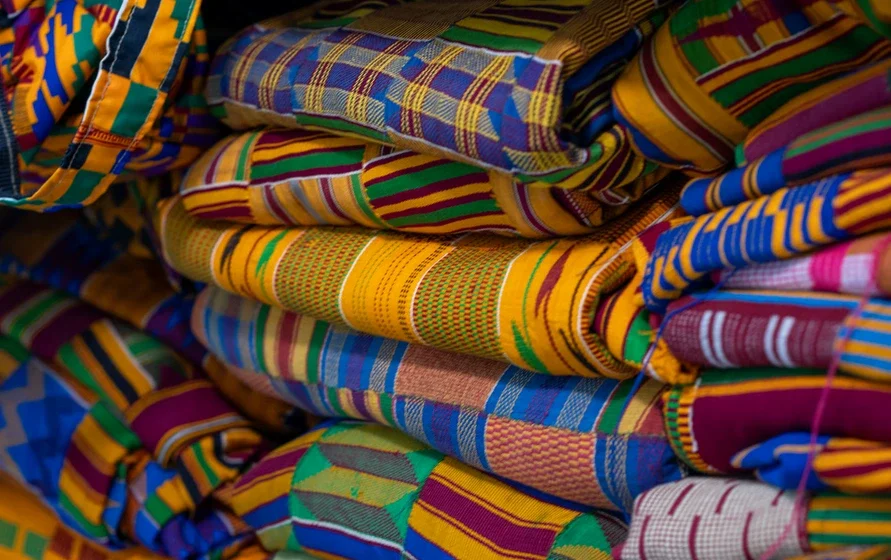
Traditional Ghanaian clothing is more than cloth. Kente strips carry proverbs. Adinkra symbols encode wisdom. Smocks (fugu) were once worn by northern warriors, though today they are everyday wear across the country. Whether you are a tourist on a short trip or someone staying longer, knowing where to shop, and how, saves you money and gets you authentic pieces.
This guide covers the best markets, villages, and shops, plus step-by-step instructions, fabric identification, and current 2026 pricing in cedis, dollars, pounds, and yuan.
How to Buy Traditional Clothing in Ghana (Step by Step)
Most Ghanaians do not buy ready-made outfits. Instead, they choose fabric, then have it tailored. Here is how the process works.
| Step | Action | Details |
|---|---|---|
| 1 | Choose your fabric type | Kente (handwoven or print), Ankara (wax print), Adinkra (stamped), or Batik (hand-dyed). |
| 2 | Buy the fabric | Markets: 4-6 yards for a full outfit. Men’s smocks or kente stoles often use less. Ask for “local” if you want authentic. |
| 3 | Find a tailor | Look inside Makola, Kejetia, or Madina Market. Ask your hotel or local friends for a trusted referral. |
| 4 | Agree on a design | Bring photos from your phone. Explain clearly—photos work better than words. |
| 5 | Pay a deposit | Usually 50-70% of the agreed labour cost. Keep a receipt or take a photo of the tailor. |
| 6 | Return for fitting | Typically 2-5 days. Try it on; ask for adjustments if needed. |
| 7 | Pay the balance & collect | Inspect the finished work before leaving. |
If you are only in Ghana for a few days, consider buying ready-made from boutiques in Osu, Airport Residential Area, or mall districts. Tailoring can be rushed, but quality may suffer.
Major Markets in Accra and Kumasi
Markets are the heart of Ghana’s textile trade. Expect lively surroundings and the expectation to bargain. Prices start lower here than anywhere else.
| Market | City | Best For | Key Details |
|---|---|---|---|
| Makola Market | Accra | Fabrics (kente, adinkra), ready-made clothes | One of Accra’s busiest markets. Excellent textile selection. Strong tailoring presence. |
| Kantamanto Market | Accra | Second-hand clothes, budget fabric | West Africa’s largest second-hand clothing hub. Tailoring is informal; better to use Makola or Kejetia for custom work. |
| Kaneshie Market | Accra | Fabrics, general goods | Large market with a dedicated textile section. Often lower prices than Makola. |
| Kejetia Market | Kumasi | Fabrics, Ashanti crafts, variety | One of West Africa’s largest markets. A major hub for textiles and skilled tailors. The redeveloped central section now operates alongside traditional market lanes. |
| Madina Market | Accra | Fabrics, tailoring | Strong tailoring community. Less touristy, good for longer-stay visitors. |
For tailoring, Makola and Kejetia are the most reliable. Kantamanto is excellent for second-hand fabric (often high-quality vintage), but its tailoring services are informal and can be hit-or-miss for visitors.
Specialized Villages and Towns
If you want to see how textiles are made and buy directly from weavers, travel to the villages where these traditions began. Prices can be lower than in city markets, and you leave with a story.
| Village / Town | Specialty | Location | What to Know |
|---|---|---|---|
| Adanwomase | Asante kente (handwoven) | Near Kumasi | Royal weaving village. Guided tours available. Community workshops sell directly. |
| Bonwire | Asante kente (handwoven) | Near Kumasi | One of the oldest kente towns. Large selection; prices can be inflated for tourists, so bargain firmly. |
| Kpetoe | Ewe kente (handwoven) | Volta Region | Distinct Ewe designs, often less expensive than Asante kente. Watch weavers at work. |
| Aburi | Mixed crafts & clothing | Eastern Region (Aburi hills) | Scenic one-stop shop for traditional clothing, wood carvings, beads. More relaxed than city markets. |
Shops and Contemporary Brands
If you prefer fixed prices, air-conditioned spaces, and ready-to-wear designs, Accra has a growing number of boutiques and concept stores.
Outphytz Ventures (The African Clothing Shop) – A registered Ghanaian company specialising in ready-made Afrocentric outfits using traditional fabrics. Located in Mallam-Gbawe (Gravel Junction, opposite Winner’s Chapel).
Other recommended shops: In Osu and Accra Mall, find Woodin (high-quality African prints) and Nallem Clothing. In Osu and Airport-area retail zones, boutiques like Christie Brown and Aya Morrison offer designer pieces blending traditional textiles with modern silhouettes. Expect prices 2-5x higher than market rates.
Fabric Comparison: Kente vs Ankara vs Adinkra vs Batik
Not all “traditional” fabrics are originally Ghanaian. Here is how to tell them apart and what to look for when shopping.
| Fabric | Origin | Authentic vs Imitation | Price Indicator (2026) |
|---|---|---|---|
| Kente (handwoven) | Asante or Ewe (Ghana) | Woven in strips, joined together. Real kente has visible weft floats. Printed “kente” is machine-printed cotton. | GHS 300-1,500 per strip (complex designs). |
| Kente (printed) | Usually China | Printed cotton with kente-like patterns. Not authentic but widely worn. | GHS 30-80 per yard. |
| Ankara / Wax Print | Netherlands (Vlisco), China, Cote d’Ivoire | Popular in Ghana but not indigenous. “Ghanaian print” is misleading—most is imported. | GHS 25-70 per yard. |
| Adinkra | Ghana (Bono, Ashanti) | Hand-stamped with natural dye using carved calabash stamps. Authentic adinkra has slight variations in stamp pressure. | GHS 80-200 per yard (hand-stamped). |
| Batik | Various (including Ghana) | Hand-dyed using wax-resist technique. Look for uneven patterns—that indicates handwork. | GHS 50-150 per yard. |
How to spot fake “handwoven” kente: Real handwoven kente is made on a loom; you can see individual threads and floats on the back. Machine-printed fabric feels uniformly flat and has no texture variation.
Cultural Meaning Behind Ghanaian Textiles
Every pattern, color, and symbol carries meaning. Wearing these fabrics is not just fashion—it communicates identity, values, and occasion.
Kente Cloth (Nwentoma)
Kente patterns are named after proverbs, historical events, or natural phenomena. For example, “Sikafuntor” (the gold seeker) symbolises wealth and hard work. Colors also matter: gold represents royalty and wealth; green stands for growth and renewal; blue conveys love and harmony. Traditionally, kente was reserved for Asante kings, but today it is worn by all Ghanaians for weddings, graduations, and important ceremonies.
Adinkra Symbols
Adinkra cloth is stamped with symbols that each convey a concept or proverb. Gye Nyame (“except for God”) represents the supremacy of a higher power. Sankofa (a bird turning its head) reminds us to learn from the past. Dwennimmen (ram’s horns) symbolises humility and strength. Knowing these symbols lets you wear not just cloth, but meaning.
Smocks (Fugu / Batakari)
Originally associated with northern Ghanaian warriors, smocks are now worn across the country for both formal and casual occasions. The hand-woven strips and embroidery can indicate the wearer’s region or status. Northern smocks are typically cotton, while southern versions may incorporate kente accents.
Best Places by Scenario
Not every shopper has the same needs. Choose your destination based on what matters most to you.
| Priority | Recommended Places | Why |
|---|---|---|
| Cheapest prices | Kantamanto (fabric), Kaneshie, Kejetia | Lowest starting prices; bargaining expected. |
| Authentic handwoven kente | Bonwire, Adanwomase, Kpetoe | Buy directly from weavers, see the process. |
| Convenience & fixed prices | Osu boutiques, Airport shops, Aburi Crafts Village | No haggling, ready-made options, air-conditioned. |
| Cultural experience | Kpetoe (Ewe kente), Adanwomase (Ashanti), craft villages near Kumasi | Guided tours, artisan interaction, deeper understanding. |
| Tailoring + fabric together | Makola (Accra), Kejetia (Kumasi), Madina (Accra) | Tailors located inside the market; easy one-stop process. |
Important Tips & Scam Warnings
Bargain Respectfully
The first price is always inflated—often 2-5x the real value. Start by offering about half. If the vendor drops quickly, you may still be paying too much. Walk away if you are unsure; vendors often call you back with a better price. Keep the interaction friendly—negotiation is a social ritual, not a confrontation.
Tailoring Realities
Most tailors work on a cash-only basis. Agree on a pickup date and write it down. Delays are common. If you are in a hurry, pay a small rush fee (GHS 50-100 extra) and check in daily. For complex designs, bring clear reference photos.
Scam & Overpricing Warnings
Tourist pricing: Vendors may double or triple prices when they hear an accent. Take a Ghanaian friend if possible, or visit markets where locals shop (Kaneshie, Madina).
Fake “handwoven” kente: Machine-printed cloth is often sold as “handwoven” to tourists. Ask to see the back of the fabric—handwoven kente has visible weft floats and irregular texture. Printed fabric is uniformly smooth.
“Ghanaian print” claims: Most Ankara is made in China or the Netherlands. If authenticity matters, ask specifically for “kente” (handwoven), “adinkra” (hand-stamped), or “batik” (hand-dyed). These are genuinely Ghanaian.
Deposits disappearing: Avoid paying 100% upfront. A 50-70% deposit is normal. Take a photo of the tailor and their shop. If something feels off, ask for a referral from your hotel or a trusted local.
Fabric Care
Handwoven kente and adinkra should be hand-washed in cold water with mild soap. Hang to dry away from direct sunlight to prevent fading. Ankara can be machine-washed on a gentle cycle, but expect some color bleed in the first wash.
What to Expect: Tiered Pricing (2026)
Prices vary widely based on quality, location, and your bargaining skill. Below are realistic ranges for 2026. Exchange rates are based on Bank of Ghana interbank mid-rates and cross-rates from March 2026 and are indicative.
| Tier | Description | GHS | USD | GBP | RMB |
|---|---|---|---|---|---|
| Budget | Market fabric (Ankara / printed kente) + simple tailoring | 150-300 | 13-26 | 10-20 | 95-190 |
| Mid | Good-quality fabric (e.g., Vlisco wax print, hand-stamped adinkra) + skilled tailor | 300-800 | 26-69 | 20-53 | 190-500 |
| Premium | Handwoven kente (complex pattern) + designer tailoring / boutique ready-made | 800-3,000+ | 69-260+ | 53-200+ | 500-1,900+ |
Notes: A single strip of handwoven kente (enough for a stole or accent) typically costs GHS 300-800. A full kente outfit can exceed GHS 2,500. Bargaining is expected at markets, but prices in boutiques and villages are often fixed or less flexible. RMB conversions are approximate cross-rates via USD; actual rates may vary.
Buying Online & Exporting
If you cannot travel to Ghana or want to ship items home, many vendors now sell via WhatsApp and Instagram. This is increasingly common for custom tailoring and bulk fabric purchases.
- Instagram / WhatsApp: Search for “Ghana kente,” “Ankara wholesale,” or “custom tailor Ghana.” Most vendors respond to DMs and can arrange shipping via DHL, FedEx, or Ghana Post.
- Export considerations: For personal use, Ghana allows export of textiles. For commercial quantities, you must register your business with the Registrar-General’s Department, register with the Ghana Export Promotion Authority (GEPA), and comply with Ghana Revenue Authority (GRA) tax requirements. Vendors experienced in international shipping can help navigate this.
- Payment: Expect to pay via mobile money (MTN MoMo) or bank transfer. Never pay 100% upfront unless you have a trusted referral.
Frequently Asked Questions
| Question | Answer |
|---|---|
| Is kente expensive in Ghana? | Authentic handwoven kente is expensive because of the labor involved. A full outfit can cost GHS 800-3,000+. Machine-printed “kente” is much cheaper (GHS 30-80 per yard) but not traditional. |
| How long does tailoring take? | Typically 2-5 days. Complex designs or busy periods (before holidays) can take 1-2 weeks. Rush orders (24-48 hours) often incur a surcharge. |
| Can foreigners wear kente or smocks? | Absolutely. Ghanaians welcome visitors wearing traditional clothing. Just be respectful: avoid wearing royal or sacred patterns (e.g., certain kente designs meant only for chiefs) unless you have been given them as a gift. |
| Is bargaining expected in all markets? | Yes, in all open-air markets. In boutiques and craft villages (e.g., Aburi), bargaining is possible but less aggressive. Fixed-price shops do not negotiate. |
| What is the best fabric for humid weather? | 100% cotton (most traditional fabrics) breathes well. Handwoven kente and adinkra are comfortable; avoid synthetic blends sold in some markets. |
| Can I buy Ghanaian clothing online from abroad? | Yes. Many vendors ship internationally. Use Instagram/WhatsApp to find sellers, and verify their reputation before sending payment. Customs duties may apply upon arrival in your country. |
If you need legal assistance for a clothing business, import/export of textiles, or any Ghana-related legal matter, consider reaching out to a qualified Ghanaian lawyer. Use the form below to get started:
Sources
- Ministry of Trade, Agribusiness and Industry (Ghana): “Creative Arts and Textile Sector Report” (2025)
- Ghana Tourism Authority (GTA) – ghana.travel: “Cultural Tourism Sites – Craft Villages” (2026)
- Bank of Ghana: Interbank Foreign Exchange Rates (March 2026)
- Ghana Export Promotion Authority (GEPA): Export Procedures
- Ghana Revenue Authority: Guidelines for Textile Imports and Exports (2025)
- Field interviews with market vendors and tailors at Makola, Kejetia, and Madina (February–March 2026)
Compliance note: All money transfer services must be licensed by the Bank of Ghana.