

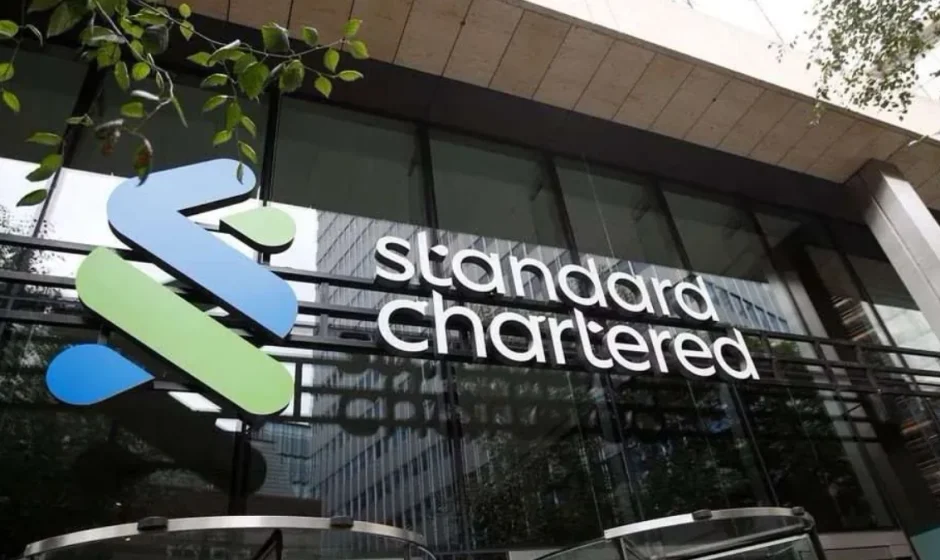

Standard Chartered PLC announced on June 25, 2026, that it plans to sell its Wealth and Retail Banking (WRB) business in Ghana. The bank has operated in Ghana for more than 130 years, making this a notable shift in how one of the country’s most established international banks will serve everyday customers going forward.
The retail side of Standard Chartered Ghana serves personal account holders, savers, and wealth management clients. That business is now being positioned for new ownership. The bank’s Corporate and Investment Banking (CIB) arm, which serves businesses, institutions, and cross-border clients, is not part of the sale and will continue operating as before.
For most individual customers, the practical question is straightforward: what happens to their accounts, savings, and investments during and after this transition? The short answer, based on the bank’s announcement, is that nothing changes immediately. But there is a process underway, and it is worth understanding what it involves.
What Is Being Sold
The Wealth and Retail Banking business at Standard Chartered Ghana includes personal current accounts, savings products, and the bank’s wealth management services for individual clients. This is the customer-facing side of the bank that most ordinary account holders interact with when they visit a branch, use the mobile app, or manage investments through the bank.
Standard Chartered’s Group CEO and Head of Coverage in Ghana, Xorse Godzi, described the retail franchise as a “strong franchise with established client base and talented colleagues” that is “well-positioned to continue to succeed under new ownership.” The language signals that the bank views this as a strategic reallocation, not a distress sale.
No buyer has been named. The bank confirmed that “any potential transaction remains subject to regulatory approvals,” which means the Bank of Ghana will need to sign off before anything is finalized.
What Standard Chartered Is Keeping
Standard Chartered’s Corporate and Investment Banking (CIB) business in Ghana is not going anywhere. This arm serves businesses, multinational companies, and institutional clients. It handles trade finance, project financing, capital markets, and cross-border transactions.
The bank has framed Ghana as a “core part of our international network,” with the CIB operation functioning as what the bank calls a “super-connector” between Ghana and global markets. This framing is backed by real activity. Over the past five years, Standard Chartered invested USD 300 million in technology and Africa-based ventures, and in 2025 alone it financed USD 5 billion in infrastructure across Africa.
For Ghana specifically, the bank was involved in the USD 200 million Clean Cooking Outcome Bond issued by the World Bank, which released USD 30.5 million in climate finance for Ghana. The USD 504 million Cote d’Ivoire sustainability-linked loan was another part of this regional push. These are the kinds of deals that will continue regardless of who owns the retail business.
Timeline and What Happens Next
The bank has indicated that the transition will take 18 to 24 months, subject to regulatory approvals. That is a substantial runway, and the bank has been direct that it will be “business-as-usual for clients” during this period.
In practice, this means retail customers should not expect immediate changes to their accounts, interest rates, fees, or service levels. The branch network, mobile banking, and customer service will continue to operate under Standard Chartered branding until the transition is formally completed.
Once a buyer is identified and regulatory approvals are granted, the retail customer accounts will transfer to the acquiring institution. At that point, account holders may be dealing with a different bank, a different app, and potentially different product terms. Standard Chartered has said its focus is on “continuity and client outcomes,” but the specifics will depend heavily on who acquires the business.
Bongiwe Gangeni, Head of WRB for Europe, Middle East and Africa at Standard Chartered, connected this Ghana decision to a broader Africa strategy: “This is about being more focused and impactful in Africa – driven by our hubs in Kenya and Nigeria, where our WRB businesses continue to drive growth at scale.” Ghana’s retail business, by implication, did not fit the scale threshold the bank now requires for its retail operations.
What Retail Customers Should Do
For now, no immediate action is required. The accounts are safe, and no disruption is expected during the transition period. Still, there are practical steps worth taking in the months ahead.
First, review fixed-term or investment products. If a savings product or investment is locked in for a period that extends beyond the likely transition window of 18 to 24 months, customers should understand what happens to that product under a new institution. Terms and conditions can change after a bank acquisition, though regulatory frameworks in Ghana require orderly handovers.
Second, watch for communication from the bank. Standard Chartered has committed to continued client engagement during the process. Official letters, emails, or app notifications about the transition will carry important details about what changes and when.
Third, use this as a moment to review your banking needs generally. If you are holding accounts at Standard Chartered primarily out of habit, and a new owner does not meet your requirements, it is easier to make changes during an extended transition than after one has been finalized. Ghana’s banking sector has grown considerably, and there are several well-capitalized banks worth considering if you are evaluating alternatives.
Diaspora customers and expats who specifically chose Standard Chartered for its international network should note that the CIB business is not being sold. However, retail international banking services and cross-border account features may look different depending on who takes over the WRB book.
Why This Is Happening
Standard Chartered’s global strategy has shifted toward markets and client segments where it has what it calls the “greatest scale and most differentiated client proposition.” In plain terms, the bank is concentrating retail banking where it is large enough to compete effectively. Ghana’s retail market, while profitable, apparently does not meet that threshold on a standalone basis.
The Africa strategy now centers on Kenya and Nigeria as the primary hubs for retail banking. These are larger markets with more scale for a bank operating a consumer product line across branches and digital channels. Ghana remains strategically important for the bank’s corporate and investment work, which is where Standard Chartered has distinct advantages in cross-border deal flow and institutional relationships.
This is not an isolated move. Globally, international banks have been trimming retail operations in smaller markets, concentrating resources in places where the return on capital is higher. The fact that Standard Chartered explicitly cited its “FY 2025 results” as the context for reaffirming this strategy suggests the decision was made at the highest level of the group and applies across markets where retail scale is deemed insufficient.
Context: Standard Chartered and Ghana’s Banking Sector
Standard Chartered has been part of Ghana’s financial system since 1896, making it one of the oldest continuously operating banks in the country. That 130-year track record gives the bank a depth of institutional history that few competitors can match.
The bank’s retreat from retail in Ghana is a narrowing of scope, not an exit. Ghana’s banking sector has matured considerably since the Bank of Ghana’s recapitalization exercise in 2017 and 2018, which pushed undercapitalized banks out of the market and strengthened the remaining institutions. The banks that survived that period are generally well-positioned.
For a foreign investor or diaspora member evaluating Ghana’s financial stability, the key signal here is regulatory. The Bank of Ghana retains full oversight of this process. No sale can proceed without regulatory sign-off, which protects depositors during the transition. Ghana’s deposit protection rules will also apply during any handover period. For more on how to navigate Ghana’s financial landscape as a foreigner, the Ghana foreign investment guide covers the broader environment in detail.
Financial Snapshot Before the Sale
Standard Chartered Ghana’s 2024 financial results, released before the sale announcement, showed an operation in reasonable health. Operating income came in at GH₵1,807 million, a 10 percent increase year-on-year. The Capital Adequacy Ratio stood at 24.0 percent, well above the Bank of Ghana’s minimum threshold. Return on Tangible Equity was 34.9 percent.
At approximately GHS 11.23 per USD as of late June 2026, based on Bank of Ghana interbank data, GH₵1,807 million translates to roughly USD 161 million in operating income. That is a meaningful business, which explains why the bank expects to find a buyer willing to continue operating the franchise.
The bank also declared a total dividend payout of GH₵227.94 million to shareholders at its 55th Annual General Meeting, which signals that Ghana operations were generating distributable profits before this strategic decision was made.
| Metric | 2024 Result |
|---|---|
| Operating Income | GH₵1,807 million (approx. USD 161 million) |
| Year-on-Year Growth | 10% |
| Capital Adequacy Ratio | 24.0% |
| Return on Tangible Equity | 34.9% |
| Dividend Payout | GH₵227.94 million |
Currency conversion based on approximate Bank of Ghana interbank rate of GHS 11.23 per USD as of June 2026. Rates change, so verify current figures at the Bank of Ghana website before making any financial decisions.
Sources
- Graphic Online / Graphic Business: Standard Chartered explores sale of Retail business in Ghana (June 25, 2026)
- Standard Chartered PLC press release via Graphic Online (June 25, 2026)
- Bank of Ghana: Daily Interbank FX Rates
Compliance note: All banking and financial services institutions operating in Ghana must be licensed by the Bank of Ghana.