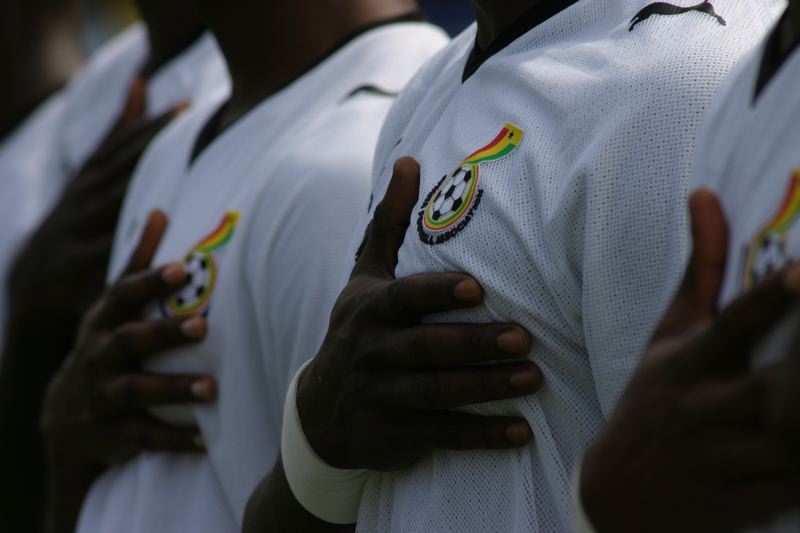

The Ghana national soccer team, known worldwide as the Black Stars, is one of Africa’s most historic and culturally important national teams. For many people, the Ghana national soccer team is not just entertainment. It is national identity, community pride, and global visibility.
This guide covers the Ghana national soccer team from every angle: history, tournaments, records, rivalries, tactics, youth development, women’s football, domestic roots, and modern challenges.
Table of contents
- Identity and governance
- Origins and early dominance
- AFCON history and results
- FIFA World Cup history
- All-time records
- Legendary players by era
- Youth football pipeline
- Women’s national team (Black Queens)
- Domestic clubs and local pipeline
- Major rivalries
- Tactical evolution
- Diaspora and dual-national players
- Infrastructure and financial realities
- Controversies and turning points
- Fan culture and national meaning
- Ghana in Africa-wide context
- Current outlook
- FAQs
- Sources
Identity and governance
The Ghana national soccer team is popularly called the Black Stars, a name linked to Ghana’s flag and Pan-African symbolism. The team is governed by the Ghana Football Association (GFA) and competes under CAF (Confederation of African Football).
- Nickname: Black Stars
- Governing body: Ghana Football Association (GFA)
- Confederation: CAF
- FIFA affiliation: 1958
Origins and early dominance
The modern Ghana national soccer team emerged after independence in 1957 and quickly became a continental standard. Ghana won AFCON titles in the 1960s and again in the late 1970s and early 1980s, building a legacy that still shapes expectations today.
Ghana’s early dominance is strongly associated with disciplined team structure and coaching leadership, including historic eras that produced multiple AFCON championships.
AFCON history and results
The Ghana national soccer team has one of the strongest Africa Cup of Nations records in history. Ghana has won AFCON four times and reached multiple finals across different decades. Even during periods without trophies, Ghana often remains a threat in knockout rounds.
| Year | Host | Finish | Notes |
|---|---|---|---|
| 1963 | Ghana | Champions | First AFCON title. |
| 1965 | Tunisia | Champions | Back-to-back titles. |
| 1968 | Ethiopia | Runner-up | Finalist performance. |
| 1970 | Sudan | Runner-up | Another final appearance. |
| 1978 | Ghana | Champions | Home title win. |
| 1982 | Libya | Champions | Fourth AFCON title. |
| 1992 | Senegal | Runner-up | Lost on penalties. |
| 2008 | Ghana | Third | Strong host nation run. |
| 2010 | Angola | Runner-up | Reached the final. |
| 2015 | Equatorial Guinea | Runner-up | Lost on penalties. |
FIFA World Cup history
Ghana’s World Cup story begins in 2006, but the defining modern moment for the Ghana national soccer team is the 2010 tournament. Ghana reached the quarterfinals, coming within one match of becoming the first African team to reach a World Cup semifinal.
| Tournament | Result | What it meant |
|---|---|---|
| 2006 | Round of 16 | First World Cup appearance and immediate global respect. |
| 2010 | Quarterfinals | Best World Cup finish in Ghana’s history. |
| 2014 | Group stage | Talent remained high, but preparation issues hurt results. |
| 2022 | Group stage | Rebuild phase with a new generation. |
All-time records
Records help define eras. These are the headline benchmarks most people look for when learning the Ghana national soccer team story.
| Category | Record | Why it matters |
|---|---|---|
| Most caps | Andre Ayew | Durability across multiple generations. |
| All-time top scorer | Asamoah Gyan | National scoring benchmark and World Cup impact. |
| Highest FIFA ranking | 14 | Reflects Ghana’s peak global status. |
| Lowest FIFA ranking | 89 | Shows how transitions can impact consistency. |
Legendary players by era
The Ghana national soccer team has produced elite players across generations, from African icons to European-league stars. Below is a practical era breakdown that helps readers understand Ghana’s football lineage.
Foundational legends
- Abedi Pele (creative leader and global icon)
- Tony Yeboah (finishing and power)
- Samuel Kuffour (elite defender, European experience)
Golden generation (2006 to 2014 core)
- Michael Essien
- Sulley Muntari
- Asamoah Gyan
Modern core
- Thomas Partey
- Mohammed Kudus
- Inaki Williams
Youth football pipeline
One of the biggest reasons the Ghana national soccer team stays relevant is Ghana’s youth system. Ghana’s youth national teams have repeatedly performed at world level, proving that the talent pipeline is real.
- FIFA U-20 World Cup Champions (2009)
- Multiple FIFA U-17 World Cup titles and deep runs
- Regular CAF youth tournament podium finishes
Women’s national team (Black Queens)
Ghana’s women’s national team, the Black Queens, has a strong African football legacy. Any complete view of the Ghana national soccer team ecosystem should acknowledge that Ghana has also fielded competitive women’s sides.
The main limitation has historically been resources and visibility. When investment rises, performance potential rises too.
Domestic clubs and local pipeline
The Ghana national soccer team begins at home. Local clubs develop early discipline, competitiveness, and identity. Two clubs are foundational in Ghana football culture: Asante Kotoko and Hearts of Oak.
In recent years, the domestic league has faced funding and stability issues, and many top prospects move abroad early. This increases international experience but can weaken local league quality.
Major rivalries
Ghana vs Nigeria
This is West Africa’s most intense rivalry. It is fueled by proximity, history, and repeated tournament clashes. Matches often feel like cultural events, not just football.
Ghana vs Ivory Coast
A modern rivalry shaped by AFCON battles and elite player generations. These games often turn on small mistakes and discipline.
Ghana vs United States
A World Cup era rivalry defined by repeated meetings on the global stage. It became a defining reference point for Ghana’s international reputation.
Tactical evolution
The Ghana national soccer team has never had a single playing style forever. Ghana has evolved with its player pool.
- 1960s to 1980s: physical dominance plus disciplined structure
- 1990s to 2000s: stronger emphasis on technical midfield control
- Modern era: European-influenced pressing, transitions, and flexible formations
Diaspora and dual-national players
Modern Ghana squads often include players born or raised outside Ghana. This has changed how the Ghana national soccer team recruits talent. The upside is access to elite academy development and high-level league experience.
The tradeoff is that squad chemistry and availability can become more complex. When managed well, the Ghana plus diaspora model raises the ceiling.
Infrastructure and financial realities
The Ghana national soccer team competes at high levels, but faces structural challenges that affect consistency:
- Stadium maintenance and training infrastructure gaps
- Sponsorship fluctuations that affect preparation
- Domestic league funding instability
- Heavy reliance on foreign-based players
These realities explain why Ghana can look world-class in one tournament and unstable in another. Football success is not only talent. It is also preparation, governance, and consistent systems.
Controversies and turning points
A complete guide to the Ghana national soccer team includes difficult moments. These are not mentioned to shame anyone. They matter because they shaped reforms and changed how Ghana approaches tournament planning.
- 2014 World Cup payment crisis: highlighted governance and preparation gaps
- Tournament camp disputes: created pressure for clearer team management rules
- Discipline and suspensions: reinforced the need for consistent standards
Fan culture and national meaning
When the Ghana national soccer team plays, daily life slows down. Markets, streets, and workplaces shift attention to the match.
Fans travel across Africa, Europe, and North America to support the Black Stars. Supporter culture includes drumming, chanting, coordinated colors, and deep emotional investment. For many, the Black Stars are a national unifier across regions, languages, and backgrounds.
Ghana in Africa-wide context
Historically, the Ghana national soccer team is commonly placed among Africa’s elite national teams alongside Egypt, Cameroon, Nigeria, and Ivory Coast.
Ghana’s unique advantage is the combination of youth success, AFCON history, and global World Cup moments.
Current outlook
The Ghana national soccer team remains a high-expectation team. Ghana is rarely judged by participation alone. The standard is competitive performance, smart preparation, and deeper tournament runs.
If you are visiting Ghana and want broader context for your trip, you may also find these helpful:
Top tourist attractions in Ghana
FAQs
Why is Ghana called the Black Stars?
The Black Star is a national symbol on Ghana’s flag and a Pan-African symbol of freedom and identity. The nickname reflects that meaning.
How many AFCON trophies has Ghana won?
Ghana has won AFCON four times: 1963, 1965, 1978, and 1982.
What is Ghana’s best World Cup finish?
The best finish for the Ghana national soccer team is the 2010 World Cup quarterfinals.
Who is Ghana’s all-time top scorer?
Asamoah Gyan is widely recognized as Ghana’s all-time leading scorer.
Sources