

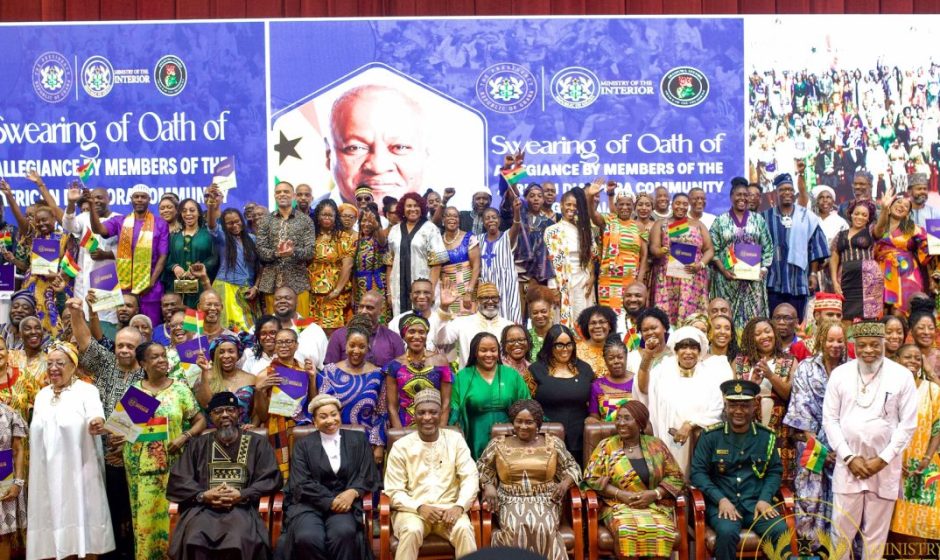

Ghana grants citizenship to African diaspora members through a formal naturalization ceremony, and that is exactly what happened in Accra when 150 people were sworn in as Ghanaian citizens. If that sounds like a symbolic event only, here is what it really means: Ghana is continuing a state-backed policy of reconnecting with descendants of Africans displaced by the transatlantic slave trade, but it is still doing so through a legal citizenship process administered by the Ministry of the Interior. That matters because this was not just a celebration. It was a government action with legal consequences, public messaging, and long-term implications for relocation, identity, and diaspora engagement.
Related Ghana guides:
What happened at the ceremony
The citizenship ceremony took place in Accra and was presented by the Ghanaian government as a moment of reconnection, healing, and belonging. According to the Ministry of the Interior, members of the African diaspora community were sworn in as Ghanaian citizens in what officials described as a significant step in Ghana’s effort to reconnect with its global African family.
The Ministry said Vice President Prof. Jane Naana Opoku-Agyemang used the event to restate Ghana’s position on the transatlantic slave trade, calling for continued recognition of that history as a crime against humanity. She also framed the ceremony as more than paperwork. Her message was plain: history may scatter a people, but identity can survive separation.
The Ministry of the Interior also made an important administrative point. Interior Minister Muntaka Mohammed-Mubarak said the event marked the end of a legal and administrative process through which people with strong ties to Ghana had formally become citizens of the Republic. That line matters because it confirms that the swearing-in followed an official process rather than an informal political gesture.
Why Ghana grants citizenship to African diaspora members matters
This story matters on three levels at once. First, it matters emotionally. For many descendants of enslaved Africans, citizenship in an African country carries deep personal meaning. Records were broken, names were changed, and family lines were scattered across continents. In that context, a Ghanaian citizenship certificate can feel like more than a legal document. It can feel like a restored link.
Second, it matters politically. Ghana has spent years positioning itself as one of the most visible African countries welcoming members of the historical diaspora. That reputation grew through the Year of Return and then expanded under the Beyond the Return agenda. This ceremony shows that the policy is still active, still public, and still central to how Ghana presents itself to the world.
Third, it matters practically. Citizenship affects travel, residency, legal identity, and the ability to build a long-term life in Ghana. People considering relocation often confuse public homecoming language with automatic citizenship. They are not the same thing. The ceremony was welcoming, but it was also formal, legal, and selective.
The legal process behind the citizenship ceremony
One of the most important details in this story is that the ceremony came at the end of a legal process. Ghanaian citizenship is governed by law, including the Citizenship Act, 2000 (Act 591). The Ministry of the Interior and related institutions handle the administrative side of citizenship matters, while the Ghana Immigration Service is one of the official bodies readers should always watch when trying to understand how citizenship rules work in practice.
Here is the plain-English version. Ghana may publicly welcome the African diaspora, but citizenship still depends on an approved route under Ghanaian law. That is why the Ministry stressed transparency, credibility, and consistency with the laws of Ghana.
For readers of GhanaCitizenship.com, that distinction is worth slowing down for. Public speeches can sound broad and emotional. Legal status is narrower. A person may feel spiritually connected to Ghana, culturally connected to Africa, and still need to complete the formal process required by the state.
That is also why readers exploring nationality, naturalization, or dual citizenship should pay close attention to the official language used by the Ministry of the Interior and the Ghana Immigration Service instead of relying only on headlines or social media reactions.
How this fits Ghana’s wider diaspora policy
This ceremony did not happen in isolation. It fits into a longer Ghanaian policy arc. The Year of Return in 2019 brought global attention to Ghana’s effort to welcome descendants of Africans dispersed by slavery. Since then, Beyond the Return has carried that message forward through tourism, heritage, investment, and long-term engagement.
Accra, Cape Coast, and Elmina have become part of that emotional geography. For many visitors, the journey starts at a historic site and then grows into something larger. Some come for remembrance. Some come for investment. Some come back again and again until relocation becomes realistic.
The official messaging around this latest ceremony suggests Ghana still sees diaspora reconnection as both a moral project and a nation-building project. You can hear both ideas in the government’s language. There is talk of healing historical wounds, but also talk of cooperation, cultural renewal, and economic transformation. That is not accidental. Ghana is saying that memory and development can live in the same policy space.
What new citizens actually receive
When Ghana grants citizenship to African diaspora applicants through a ceremony like this, the result is not just ceremonial recognition. It means the state has accepted them as citizens under its legal framework. That brings real consequences.
| Area | What it means in practice | Why it matters |
|---|---|---|
| Legal identity | The person is recognized by Ghana as a citizen after formal approval and swearing-in. | This moves them beyond visitor or resident status. |
| Belonging | The state publicly acknowledges a connection between Ghana and the diaspora applicant. | For many families, that carries emotional and historical weight. |
| Relocation potential | Citizenship can make long-term settlement in Ghana easier than temporary visa-based living. | It changes how someone plans housing, business, and family life. |
| Public policy signal | Each ceremony shows Ghana is continuing to welcome approved diaspora applicants. | That shapes how the country is viewed internationally. |
Still, readers should be careful not to assume every right or administrative step is automatic the same day the oath is taken. Real life is often slower than the ceremony. Documents, records, and follow-up processes can take time. Ghana, like anywhere else, runs on both law and bureaucracy.
The bigger picture for Ghana and the diaspora
There is a wider story beneath the headlines. Ghana is not only offering a welcome. It is shaping a model. In recent years, several African countries have looked more seriously at the diaspora as a source of cultural reconnection, investment, and international influence. Ghana has been one of the most visible examples.
That visibility comes with pressure. If the process is too opaque, people lose trust. If it is too slow, momentum fades. If the messaging is emotional but the administrative experience is confusing, applicants can feel the gap between symbol and state. The Ministry’s emphasis on transparency and credibility suggests the government understands that risk.
For people abroad thinking about Ghana seriously, this is the useful takeaway: citizenship ceremonies are powerful, but the real question is process. What route applies to you? Which ministry handles it? What evidence is required? What timeline is realistic? Those are the questions that turn inspiration into an actual plan.
If you need personalized legal assistance with Ghanaian citizenship, naturalization, or dual nationality questions, consider reaching out to a qualified Ghanaian lawyer. Use the form below to get started:
Sources
- Ministry of the Interior: “African Diaspora sworn in as Ghanaian Citizens in heartwarming ceremony” (March 10, 2026)
- France 24: “‘Home’ at last: Ghana grants citizenship to 150 members of African diaspora” (March 10, 2026)
- Africanews: “Ghana grants citizenship to members of African diaspora” (March 10, 2026)
- Ghana Immigration Service
Compliance note: All money transfer services must be licensed by the Bank of Ghana.
