
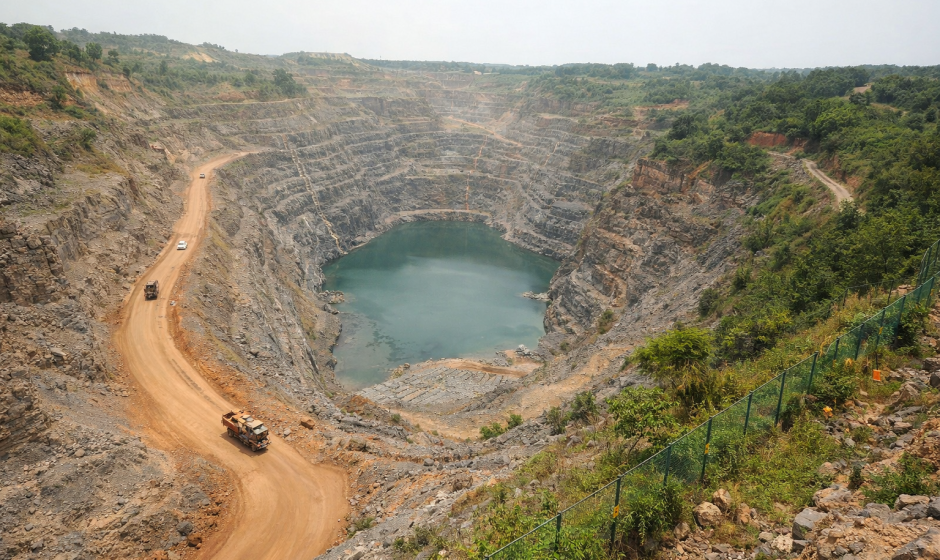

On April 7, 2026, Ghana’s government awarded the mining lease for the Damang gold mine to Engineers & Planners Ltd (E&P), a local firm. The decision ends Gold Fields’ roughly three decades of operation and follows a competitive tender that required bidders to show at least $500 million in financing.
If that sounds like routine government paperwork, here is what it actually means: Ghana is no longer automatically renewing foreign mining leases. It is actively shifting control of major gold assets to domestic companies. This is resource nationalism in action, not just a one-off deal.
Why does that matter? Because Damang is one of Ghana’s key gold mines. How this transition plays out will affect thousands of jobs, millions in government royalties, and the investment climate for every foreign miner in the country. Success could inspire more local takeovers. Failure could scare off capital and hurt production.
What Happened: Damang Lease Award
Ghana’s Lands and Natural Resources Minister Emmanuel Armah-Kofi Buah announced that the Minerals Commission recommended E&P as the successful bidder. The company demonstrated access to $505 million in financing, just above the $500 million threshold. It also scored high on technical experience, equipment, safety, and local content.
Gold Fields had operated Damang for roughly three decades. In April 2025, the government rejected the company’s lease renewal, breaking with years of automatic extensions. However, Ghana and Gold Fields later reached a transitional arrangement: a 12-month lease was issued to a Gold Fields subsidiary to allow continued open-pit mining and reserve work ahead of the final handover. That bridge period ends with the April 2026 transfer.
Gold Fields had previously said the mine had limited remaining life and lacked economic reserves. It later committed to a smooth transition. The government’s tender was open only to 100% Ghanaian-owned firms, according to the Minerals Commission’s published criteria. According to Reuters, the aim is to keep the mine operating, protect jobs, and increase local participation in mining.
Why Ghana Chose a Local Firm
This is not an isolated decision. It is part of a broader policy shift under President John Dramani Mahama’s administration. The government wants more value from gold to stay in Ghana through local operators, taxes, supplier contracts, and wages sent home rather than abroad.
The tender rules, as reported by Bloomberg and confirmed by the Minerals Commission, restricted bidding to Ghanaian-owned firms. That sent a clear signal: strategic mining assets are now reserved for domestic capital, at least where a credible local bid exists.
E&P won because it met the financing bar and had roughly a decade of experience as a contract miner at Damang, having been the primary mining contractor there since 2016. That matters. The company already knows the site, the geology, and the operational challenges. It is not starting from zero.
Engineers & Planners and Ibrahim Mahama
Engineers & Planners was founded in 1997 by Ibrahim Mahama. It started as a heavy equipment rental and civil engineering firm. According to the company’s public materials and reports from Nairametrics, it is now the largest indigenous-owned mining company in West Africa, employing over 4,000 people. Beyond mining, Mahama’s holdings include Dzata Cement, Asutuare Poultry Farms, and Man Bosch vehicle distribution.
Ibrahim Mahama is also the brother of President John Dramani Mahama. That connection has drawn public scrutiny. Opposition figures have called the award “untidy” and raised questions about transparency. The presidency has rejected favoritism claims. A report from The Ghana Report notes that the previous NPP government issued a “No Objection Letter” to E&P in March 2024, well before the current administration took over. That claim is single-sourced but provides useful context.
Still, the political ownership of the winning bidder makes governance a central part of this story, not just mining economics. How the government handles public disclosure including whether it publishes the full lease report will set a precedent for future awards.
Jobs and Economic Impact
The government says the transition is intended to protect jobs and keep the mine operating. Damang directly employs over 2,000 people. Across both Damang and Tarkwa, Gold Fields has reported a total Ghana workforce of over 7,000 people (99% Ghanaian). The company has invested roughly $5 billion in the two mines since 2000 and contributed $2.9 billion to the state in taxes, royalties, and dividends, according to a Gold Fields statement cited by The High Street Journal.
Under local ownership, the hope is that even more value stays in Ghana. That means:
- More local procurement of equipment, fuel, and catering
- More contracts for Ghanaian engineering and logistics firms
- Higher retention of wages and supplier payments within the economy
But there is a catch. Reviving Damang is estimated to require roughly $600 million in new investment, according to the December 2025 feasibility study. That money will need to be raised, and execution risk is high. If the mine cannot be made profitable again, jobs could still be at risk despite government intentions.
Risks and Governance Questions
Three big questions hang over this deal.
First, can the mine be profitably revived? The December 2025 feasibility study, cited by NewsGhana and the Minerals Commission, found that Damang can sustain operations for approximately nine more years with projected output of 100,000 to 150,000 ounces per year. That is a positive sign, but it depends on successful capital deployment and gold prices holding.
Second, is the financing real? E&P showed access to $505 million, but the full revival cost is estimated at roughly $600 million. Where will the rest come from? Debt? Equity? Government support? Those details matter.
Third, is governance transparent enough? The president’s brother owning the winning bidder creates a perception problem regardless of the facts. Civil society groups have called for the full lease agreement to be published. If the government resists, trust in the process will erode.
Reuters previously reported that Damang might need $600 million to $1 billion to fully revive, with the higher figure cited before the feasibility study was completed. Now that the study is available, the $600 million figure is the more current estimate. The lease award is only step one. Execution matters more than the headline.
What It Means for Investors
For foreign mining companies, the message is mixed. On one hand, Ghana is signaling that local ownership is a priority. Long-term leases are no longer automatic. Foreign firms may face more competition and higher local-content requirements.
On the other hand, the government still needs foreign capital, technology, and expertise. The new sliding-scale royalty regime, confirmed by Reuters, replaces the flat 5% rate with a variable rate tied to gold prices. That shows Ghana wants a bigger share, not to shut out outsiders entirely.
For local and diaspora investors, opportunities are opening up. The mining services sector drilling, equipment maintenance, logistics, security, catering will likely grow as local operators prefer local suppliers. The Ghana Stock Exchange’s mining listings could also see renewed interest if Damang’s revival succeeds.
If you are considering Ghana’s mining supply chain or related infrastructure investments, this is a signal to watch closely. Success here will open doors. Failure will tighten lending and dampen enthusiasm for other local takeovers.
My Honest Take
This is the kind of move that can become historic or disappointing. The ambition is right: keep more gold wealth in Ghana. And E&P is not a shell company. It has real equipment, a long track record as a contract miner at Damang since 2016, and on-the-ground knowledge.
But the political optics are unavoidable. The president’s brother won a no-bid? No, it was a competitive tender. But the perception of favoritism will follow every production delay or cost overrun. That means E&P and the government have to be hypertransparent: publish the lease, disclose financing sources, and report progress publicly.
If they succeed, Damang could become a model for local ownership across Africa. If they fail, it will be cited for years as a cautionary tale. The next 18 months will tell us which way this goes.
Looking for business opportunities in Ghana’s growing economy? Our e-book 543 Business Ideas to Start in Ghana covers mining services, logistics, and high-potential sectors. Get your copy here →
Sources
- Reuters: “Ghana awards Gold Fields’ Damang mine lease to local firm Engineers & Planners” (April 7, 2026)
- Reuters: “Ghana and Gold Fields reach transitional deal on Damang mine” (April 23, 2025)
- Bloomberg: “E&P of Ghana Wins Bid to Run Damang Mine After Gold Fields Exit” (April 8, 2026)
- Reuters: “Ghana to introduce new gold royalty regime” (March 9, 2026)
- The Ghana Report: “The NPP approved the Damang deal so why is it suddenly controversial?” (April 2026)
- The High Street Journal: “Gold Fields Highlights $2.9 Billion Fiscal Contribution to Ghana” (2025)
- NewsGhana: “Damang Mine Feasibility Study Confirms Nine Years of Operations” (December 2025)