



The Government of Ghana has formally announced a new pathway granting Ghana citizenship for historic diasporan community members. The announcement, published by the Ministry of the Interior, signals a structured effort to recognize descendants of the transatlantic slave trade and long-standing African diaspora communities.
This move builds on earlier initiatives such as the Year of Return and the Right of Abode program. However, this time the policy centers specifically on granting Ghana citizenship for historic diasporan community applicants who can demonstrate ancestral and cultural ties.
You can read the official government statement here:
Ministry of the Interior Announcement.
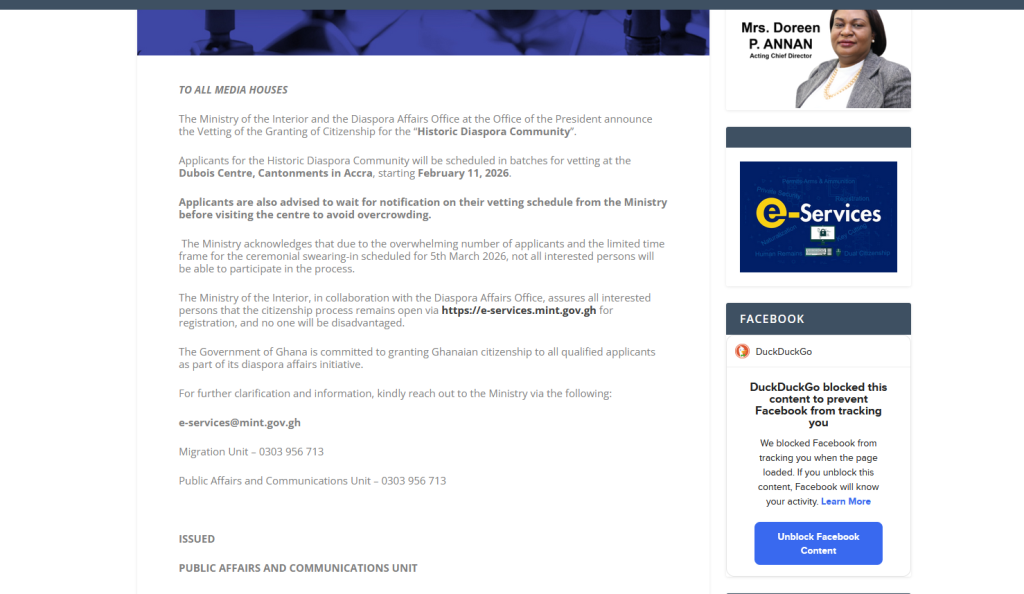
What Was Announced
According to the Ministry, Ghana will grant Ghana citizenship for historic diasporan community applicants who meet eligibility requirements under Ghana’s Citizenship Act framework. The policy recognizes descendants of Africans forcibly displaced during the slave trade and long-established diaspora communities seeking formal reconnection.
While Ghana has long permitted naturalization under the standard citizenship process, this initiative acknowledges historical displacement as a distinct factor.
The legal foundation still rests within the Citizenship Act, 2000 (Act 591), particularly provisions related to registration and naturalization. This announcement does not replace Ghana’s existing citizenship laws but works within them.
Who May Qualify Under Ghana Citizenship for Historic Diasporan Community
Eligibility details are expected to follow administrative guidelines. Based on the announcement, applicants may need to demonstrate:
- Documented African ancestral lineage connected to Ghana or West Africa
- Cultural or historical ties to Ghana
- Good character and security clearance
- Commitment to Ghana’s constitutional framework
This pathway differs from ordinary naturalization, which typically requires five to seven years of residency. You can compare this with our full guide on naturalization in Ghana.
Historical Context Behind the Policy
The idea of restoring citizenship to descendants of the diaspora traces back to President Kwame Nkrumah’s pan-African vision in 1957. Nkrumah openly invited African Americans and other diaspora communities to help build the newly independent state.
Over time, initiatives like PANAFEST, Emancipation Day, and the Year of Return strengthened Ghana’s position as a symbolic home for the global African diaspora. Granting Ghana citizenship for historic diasporan community members represents a formal extension of that philosophy.
Ghana’s coastal castles, including Cape Coast and Elmina, remain physical reminders of this shared history. For many diaspora visitors, citizenship represents closure and legal belonging.
What Ghana Citizenship for Historic Diasporan Community Means in Practice
If implemented as described, approved applicants would enjoy the full rights of Ghanaian citizens. That includes:
- The right to live and work in Ghana without residency permits
- The ability to own property without foreign restrictions
- Access to Ghanaian passports
- Participation in national life, subject to constitutional limitations
Dual citizenship remains possible under Ghanaian law. If you are a U.S. citizen, see our detailed breakdown here:
Ghana dual citizenship requirements for U.S. citizens.
It is important to verify whether your current country allows dual nationality before applying.
Important Clarifications
The announcement does not eliminate naturalization. Individuals without documented diasporan lineage may still pursue Ghanaian citizenship through:
- Naturalization
- Marriage to a Ghanaian citizen
- Registration pathways
The Ghana citizenship for historic diasporan community initiative is an additional recognition pathway, not a replacement.
Applicants should expect background checks, documentation reviews, and formal oath procedures, consistent with Ghana’s constitutional framework.
FAQs
Is this the same as the Right of Abode?
No. Right of Abode grants permanent residency. This initiative grants full citizenship if approved.
Will residency in Ghana still be required?
Official guidelines will clarify this. Traditional naturalization requires residency, but this historic diasporan pathway may modify that requirement.
Does this apply to all African descendants worldwide?
Details are pending. Documentation and lineage verification will likely be required.
Sources
- Ministry of the Interior, Ghana – Official Announcement
- Citizenship Act, 2000 (Act 591)
- Ghana Immigration Service publications