
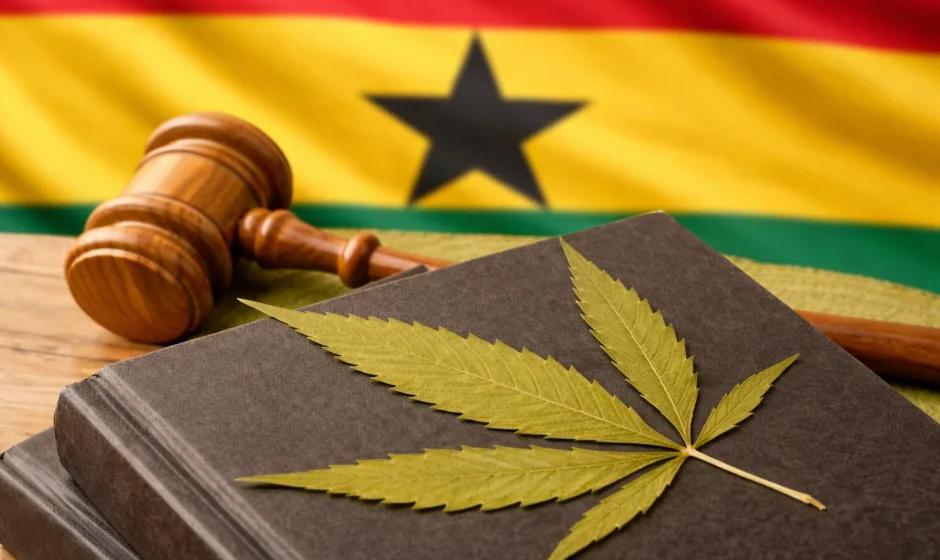

Ghana has officially opened applications for industrial and medicinal cannabis licenses, marking the start of a new regulated sector within the country’s agricultural and pharmaceutical industries. The licensing system is being administered by the Narcotics Control Commission (NACOC) and allows qualified companies to apply for permission to cultivate and process low-THC cannabis under strict government oversight.
The announcement follows the launch of Ghana’s national cannabis regulatory framework on February 26, 2026, by the Ministry of the Interior. The framework allows controlled participation in the cannabis industry while maintaining strict enforcement against illegal drug trafficking and unauthorized cannabis production.
The policy operates under Ghana’s Narcotics Control Commission Act, 2020 (Act 1019), which permits licensed cultivation of cannabis that contains extremely low levels of THC. The law is designed to support industrial hemp production, pharmaceutical development, and scientific research while keeping recreational marijuana illegal in Ghana.

Ghana Launches a Regulated Cannabis Industry
The new licensing program represents one of the most significant policy shifts in Ghana’s agricultural and pharmaceutical sectors in recent years. By allowing licensed cultivation of industrial hemp, Ghana aims to attract investment, expand agricultural exports, and develop new industries based on hemp-derived products.
Government officials have emphasized that cannabis production will remain tightly regulated and monitored to prevent diversion into illegal markets. Only licensed operators that meet strict security, reporting, and compliance requirements will be permitted to participate in the industry.
The initiative reflects a broader global trend in which governments allow controlled production of low-THC cannabis for industrial and medical uses while maintaining strict restrictions on recreational marijuana.
Cannabis in Ghana Is Strictly Limited to Industrial and Medicinal Use
Although Ghana is opening the door to cannabis cultivation, the law only permits production of cannabis with extremely low levels of THC.
Under Ghanaian law, cannabis must contain no more than 0.3 percent THC on a dry weight basis. Cannabis below this threshold is classified as industrial hemp rather than recreational marijuana.
Industrial hemp is widely used around the world to produce a variety of commercial products including:
- Textiles and fiber
- Pharmaceutical compounds
- Cosmetics and skincare products
- Nutritional supplements
- Construction materials
- Industrial oils and lubricants
Recreational marijuana remains illegal in Ghana. Possession, trafficking, or cultivation of cannabis with THC levels above the legal limit remains a criminal offense under Ghanaian law.
Eleven Types of Cannabis Licenses Available
The new regulatory framework allows businesses to apply for multiple types of licenses covering different stages of the cannabis supply chain.
According to the Narcotics Control Commission, the available license categories include:
- Cultivation
- Processing
- Breeding
- Research and development
- Laboratory testing
- Storage
- Transportation
- Import
- Export
- Distribution
- Advertising and promotion
These categories are designed to support a complete legal cannabis industry that includes farming, scientific research, manufacturing, and international trade.
Strict Oversight by the Narcotics Control Commission
The Narcotics Control Commission will oversee all licensing, compliance monitoring, and enforcement activities related to the cannabis industry.
Companies applying for licenses must demonstrate that they can operate within a tightly controlled regulatory environment. Applicants will typically need to provide evidence of:
- Secure cultivation facilities
- Controlled access and surveillance systems
- Product tracking and inventory systems
- Compliance with national narcotics regulations
- Verified commercial buyers or industrial partners
These safeguards are intended to ensure that cannabis produced under the program remains within the legal supply chain and is not diverted into illegal markets.
Economic Opportunities for Ghana
The legalization of industrial cannabis cultivation could create significant economic opportunities for Ghana. Industrial hemp has become a rapidly growing sector in several countries due to its wide range of commercial uses and increasing global demand.
Potential economic benefits include:
- Job creation in agriculture and manufacturing
- Export revenue from hemp-based products
- Growth of pharmaceutical research and development
- Investment in modern agricultural technology
Countries such as Canada, the United States, and several European nations have already developed large industrial hemp industries. Ghana may seek to position itself as a competitive supplier within Africa and international markets as the regulatory framework continues to develop.
Recreational Marijuana Remains Illegal
Despite the new licensing framework, Ghana has not legalized recreational cannabis use.
Possession, trafficking, or cultivation of high-THC cannabis remains illegal under the Narcotics Control Commission Act. The current policy focuses exclusively on industrial hemp production and controlled medicinal applications.
Authorities have emphasized that enforcement against illegal drug activity will continue even as the regulated cannabis industry develops.
A New Agricultural Sector for Ghana
The launch of cannabis licensing marks a new chapter in Ghana’s agricultural and pharmaceutical policy. If successfully implemented, the program could lead to the development of a regulated industry focused on hemp fiber production, pharmaceutical research, and international export markets.
At the same time, strict regulatory oversight will remain in place to ensure that cannabis cultivation stays within the legal limits defined by Ghanaian law and international narcotics conventions.
Sources
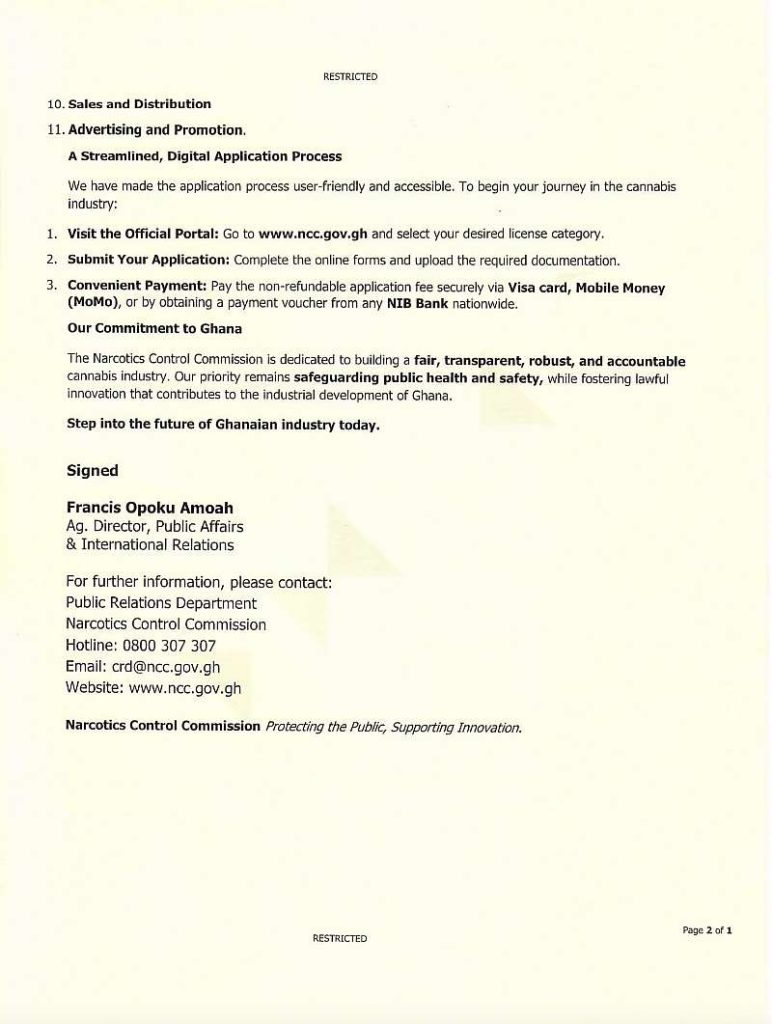
- Narcotics Control Commission. “A New Era for Innovation: Ghana Officially Launches the Licensing Regime for Industrial and Medicinal Cannabis.” Press Release, March 11, 2026.
- Pulse Ghana – Ghana officially opens applications for cannabis licensing
- Modern Ghana – Applications for cultivation and management of cannabis now open
Related Ghana guides:
All money transfer services must be licensed by the Bank of Ghana.