

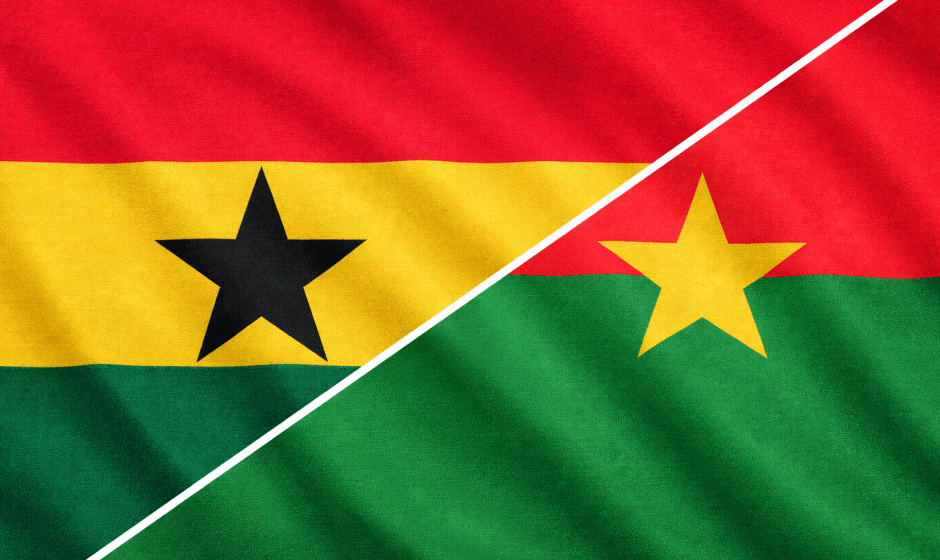

Ghana and Burkina Faso have signed seven bilateral agreements aimed at strengthening security, improving trade facilitation, enhancing border governance, and combating illicit trafficking along one of West Africa’s most important commercial routes.
The agreements were concluded during the 13th session of the Permanent Joint Commission for Cooperation, marking a diplomatic reset after roughly six years of limited structured engagement between the two countries.
Why the Tema–Ouagadougou Corridor Matters
Burkina Faso is a landlocked country and depends heavily on access to Ghana’s ports, particularly the Port of Tema, for imports and exports. The Tema–Ouagadougou corridor serves as a primary route for fuel, food supplies, construction materials, and commercial goods.
Disruptions along this corridor directly affect prices, supply chains, and investor confidence in both countries. Securing this trade artery is therefore both an economic and security priority.
What the Seven Agreements Cover
1. Security and Counter-Extremism
Both governments agreed to strengthen cooperation in addressing terrorism and violent extremism along their shared border. Rising insecurity in the Sahel region has increased risks for traders and transport operators operating along cross-border routes.
2. Transport and Trade Facilitation
- Mutual recognition of national driver’s licences
- Harmonised transport and road transit procedures
These measures are designed to reduce administrative delays and regulatory bottlenecks along the corridor.
3. Cross-Border Governance
- A framework agreement on cross-border cooperation
- Periodic consultations between local border authorities
- A joint commission to reaffirm and manage the international boundary
These mechanisms aim to improve coordination between frontier communities and reduce the risk of border disputes.
4. Disaster Prevention and Humanitarian Cooperation
The countries signed a cooperation protocol on disaster prevention and humanitarian crisis management, including coordination related to flooding and dam spillages affecting cross-border communities.
5. Combating Illicit Drugs
An agreement was signed targeting illicit cultivation, production, manufacture, and trafficking of narcotic and psychotropic substances along the corridor.
Broader Regional Context
The agreements come amid heightened instability in parts of the Sahel region. Security challenges increasingly intersect with trade and logistics, making economic resilience dependent on cross-border cooperation.
For Ghana, stability along the northern frontier is strategically important. For Burkina Faso, reliable port access is economically essential.
Summary of Agreements
| Category | Key Measures | Primary Objective |
|---|---|---|
| Security | Counter-extremism cooperation framework | Protect traders and reduce border insecurity |
| Transport | Driver’s licence recognition, transit harmonisation | Reduce trade delays |
| Border Governance | Joint commission and consultations | Improve frontier coordination |
| Disaster Management | Humanitarian crisis response protocol | Flood and emergency coordination |
| Anti-Drug Cooperation | Joint enforcement against trafficking | Protect corridor integrity |
Sources
Compliance Notice: All money transfer services must be licensed by the Bank of Ghana.