
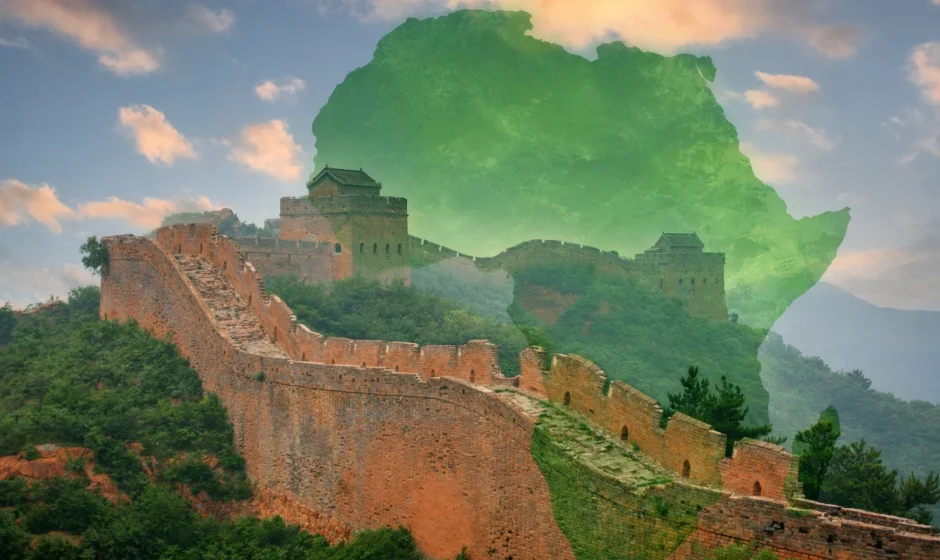

The China zero tariffs Africa policy sounds like a breakthrough. Starting May 1, 2026, China is removing import duties on goods from 53 African countries with which it has diplomatic ties.
On the surface, this looks like a major shift. Zero tariffs suggest easier access to one of the world’s largest markets. However, once you examine the data and trade structure, the real impact becomes more limited.
If you are exploring exporting from Ghana, understanding legal structure, licensing, and market positioning is critical before entering the Chinese market. Many businesses underestimate this step.
The Global Trade Context
This move comes at a time when global trade relationships are shifting.
The United States recently extended AGOA through the end of 2026. However, the short-term extension and broader tariff policies still create uncertainty for African exporters.
China, on the other hand, is positioning itself as a long-term partner. Trade between China and Africa reached approximately 295.56 billion dollars in 2024, making China the continent’s largest trading partner.
Despite this growth, the relationship is uneven. Africa ran a trade deficit of roughly 62 billion dollars with China.
What Africa Actually Exports to China
| Category | Examples | Value Impact |
|---|---|---|
| Raw Materials | Oil, gold, copper, cobalt | High (dominates exports) |
| Agriculture (raw) | Cocoa, timber | Moderate |
| Manufactured Goods | Textiles, processed food | Low (limited scale) |
This structure explains why tariff removal alone does not significantly increase exports.
China Zero Tariffs Africa: Why It Does Not Change the Core Problem
At first glance, removing tariffs should boost African exports. In practice, many of Africa’s main exports to China were already entering with low or zero tariffs.
The real limitation is production capacity. Africa primarily exports raw materials, while higher-value goods are still produced elsewhere.
The sectors that benefit most from zero tariffs, such as manufacturing and agro-processing, remain underdeveloped in many countries.
China’s Strategic Positioning
This policy is not purely economic. It is also strategic.
China strengthens its influence by offering market access while reinforcing diplomatic alignment across the continent.
Only countries that recognize Beijing are included. Eswatini is excluded because of its relationship with Taiwan.
As a result, trade access is increasingly tied to geopolitical alignment.
Who Benefits Most
The biggest gains go to countries with existing production capacity, including South Africa, Kenya, Nigeria, Egypt, and Morocco.
Chinese firms operating in Africa also benefit, particularly those already integrated into extraction, infrastructure, and agriculture.
China Zero Tariffs Africa: What Ghana Must Do Next
For Ghana, the opportunity is not automatic. It depends on building industries that can export finished or semi-processed goods.
Key sectors include agro-processing, cocoa derivatives, light manufacturing, and mineral processing. These are areas where Ghana can move up the value chain.
Institutions such as the Ghana Investment Promotion Centre (GIPC) and the Ministry of Trade and Industry play a central role in shaping this transition. Their policies determine how easily businesses can enter and scale within these sectors.
Without industrial growth, Ghana will continue exporting raw commodities while importing finished goods.
What This Means for Investors
This policy creates an opportunity, but only for those prepared to act strategically.
Exporting to China from Ghana requires proper business registration, regulatory compliance, and supply chain planning. Skipping these steps creates significant risk.
If you need personalized legal or business setup guidance, you can get connected with a qualified professional below:
The Bottom Line
The China zero tariffs Africa policy expands access, but it does not change production capacity.
Africa now has more open access to China. However, the real challenge is whether it can supply higher-value goods at scale.
Related Ghana guides:
Sources
- Reuters: China to implement zero tariffs on 53 African countries (2026)
- Reuters: China Africa trade data and tariff policy
- SAIS-CARI China Africa Trade Data
Compliance Note: All money transfer services must be licensed by the Bank of Ghana.