
Kwame Nkrumah Memorial Park, Accra

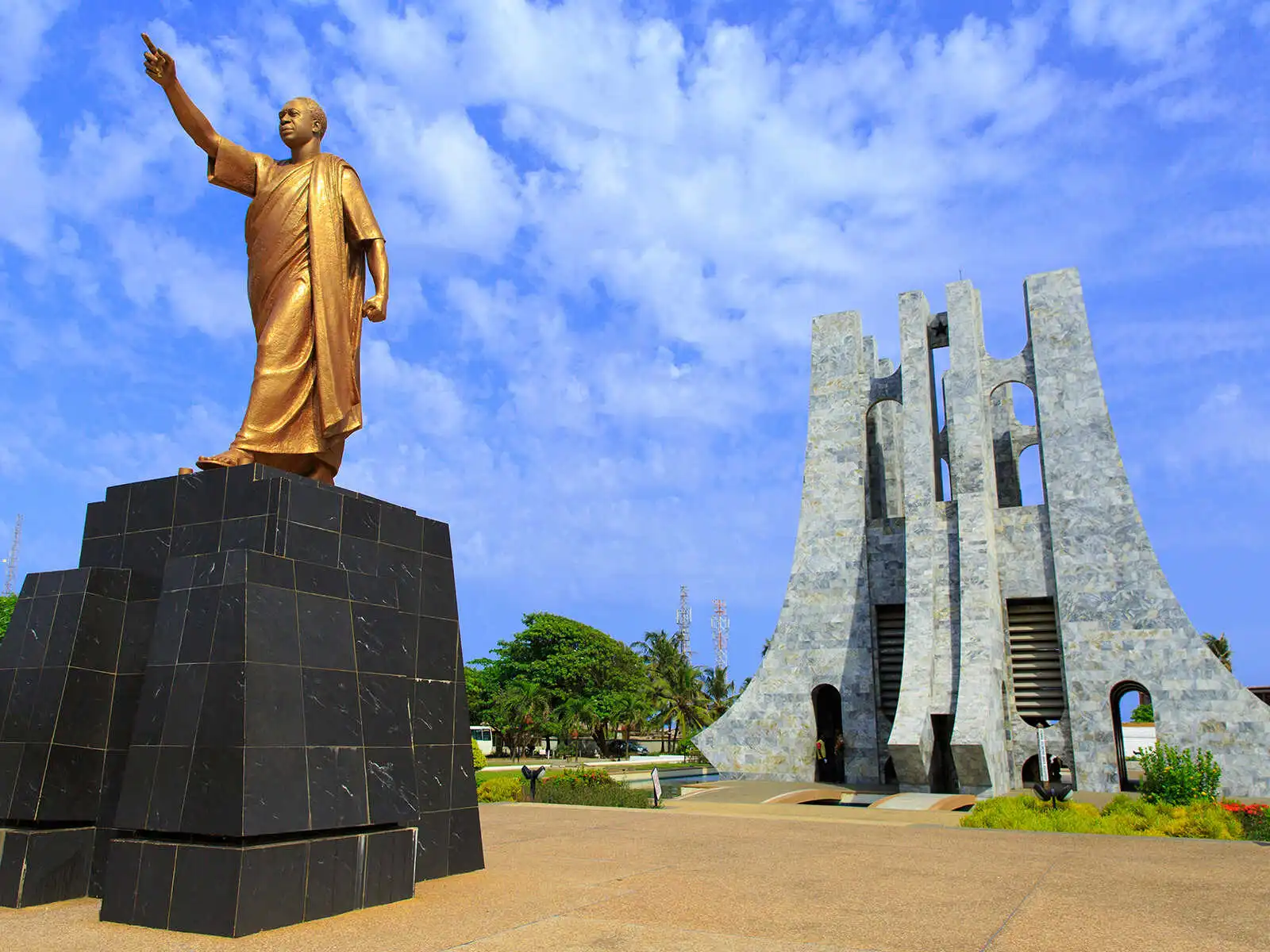
Kwame Nkrumah Memorial Park is one of Ghana’s most important historical and cultural landmarks. Located in central Accra, the park honors Kwame Nkrumah, Ghana’s first Prime Minister and President, and the man most closely associated with the country’s independence and Pan African vision. The site combines a mausoleum, museum, statues, and landscaped gardens into a space meant for reflection rather than spectacle.
 Kwame Nkrumah Memorial Park
Table of Contents
Where the memorial park is located
The Kwame Nkrumah Memorial Park is located in central Accra, near the Accra Sports Stadium and within walking distance of Black Star Square. It sits on the former site of the British colonial polo grounds, placing it physically and symbolically at the center of Ghana’s transition from colonial rule to independence.
Why the memorial park exists
The park exists to preserve the legacy of Kwame Nkrumah and to document Ghana’s independence journey. It serves both as a burial site and as a national memory space. Rather than glorifying power, the park focuses on leadership, sacrifice, and the long struggle for self rule.
Who Kwame Nkrumah was
Kwame Nkrumah was the central figure in Ghana’s independence movement. He led the country to independence in 1957, making Ghana the first sub Saharan African nation to break free from colonial rule. Beyond Ghana, Nkrumah was a major voice for Pan African unity and African self determination.
His ideas influenced liberation movements across the continent, and his political writings continue to shape discussions around African sovereignty and development.
Architecture and symbolism
The mausoleum is the architectural centerpiece of the park. It was designed in the shape of an upturned sword, a traditional Akan symbol that represents peace after conflict. The structure sits in a shallow pool of water, symbolizing purity and continuity.
The surrounding gardens are deliberately open and calm, reinforcing the idea that the site is a place of reflection rather than political performance.
What you will see inside the park
- The Mausoleum: Final resting place of Kwame Nkrumah and his wife Fathia Nkrumah.
- Museum galleries: Personal items, photographs, books, and archival material.
- Statues: Including a prominent statue of Nkrumah pointing forward, symbolizing progress.
- Gardens and water features: Designed to encourage quiet reflection.
Prices and cost to visit
| Visitor Type | Typical Cost | Notes |
|---|---|---|
| Ghanaian adults | GHS 25 | Valid Ghana Card or local ID may be required. |
| Non Ghanaian adults | GHS 40 | Applies to foreign visitors and tourists. |
| Students and children | GHS 10 | School groups often receive additional discounts. |
Prices may change periodically. Visitors should confirm current fees at the entrance or through official tourism channels before visiting.
Visitor rules and etiquette
- Dress respectfully, as the site is a national memorial.
- Photography may be restricted inside certain museum areas.
- Follow guidance from staff and posted signs.
- Maintain quiet and respectful behavior near the mausoleum.
Why the site matters to the African diaspora
For many visitors from the African diaspora, the Kwame Nkrumah Memorial Park represents a physical link to modern African self governance. It is often visited by returnees, researchers, and those exploring long term ties to Ghana. The park provides context for understanding Ghana not just as a destination, but as a political and historical home.
Nearby sites to bundle with your visit
- Black Star Square: Ghana’s main ceremonial ground, located nearby.
- Accra Sports Stadium: A major national sports venue.
- Central Accra: Easy access to museums, markets, and government buildings.
Sources
- Visit Ghana:
Kwame Nkrumah Memorial Park - Ministry of Tourism, Arts and Culture:
mint.gov.gh